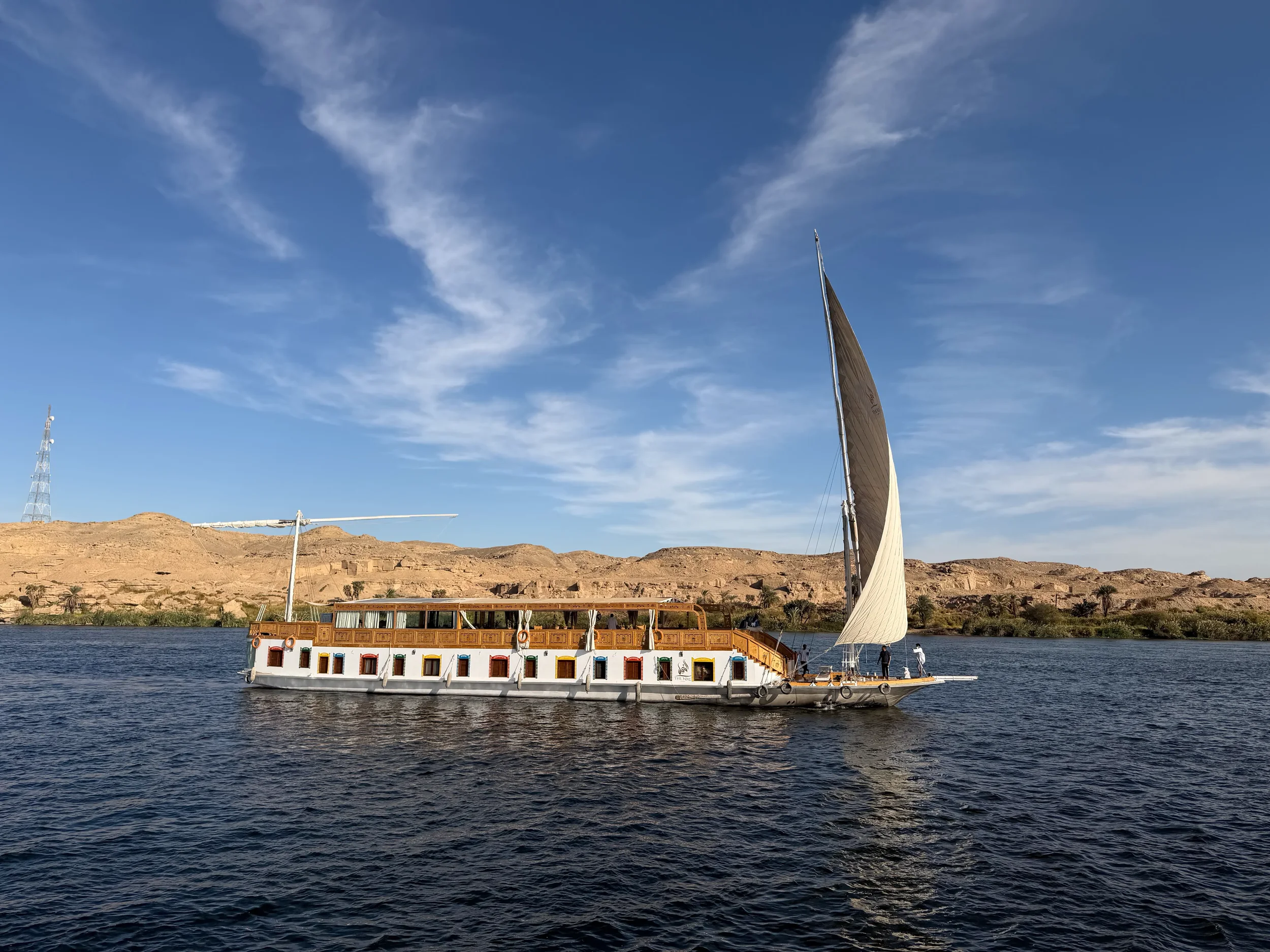
The Nile Dahabiya Nile Cruise
I recently took a 3-night, 4-day cruise on The Nile Dahabiya - we started in Aswan and journeyed north on the Nile River, finishing in Luxor - and I have to share my amazing experience on this bespoke yacht!
During our time sailing, we visited a few sites that large Nile Cruise ships can't even dock at, and our journey was made even better by the absence of any crowds at big temples like Kom Ombo and Edfu.
Keep reading and I'll share:
1. The different cabins, suites, and common areas on board The Nile Dahabiya
2. Why you should choose The Nile Dahabiya instead of one of the giant Nile Cruises, and what makes it stand out in comparison to other Dahabiya yachts
3. My experience during my 4 days on The Nile Dahabiya from Aswan to Luxor, and the itinerary from Luxor to Aswan
4. How you can book your cruise on The Nile Dahabiya
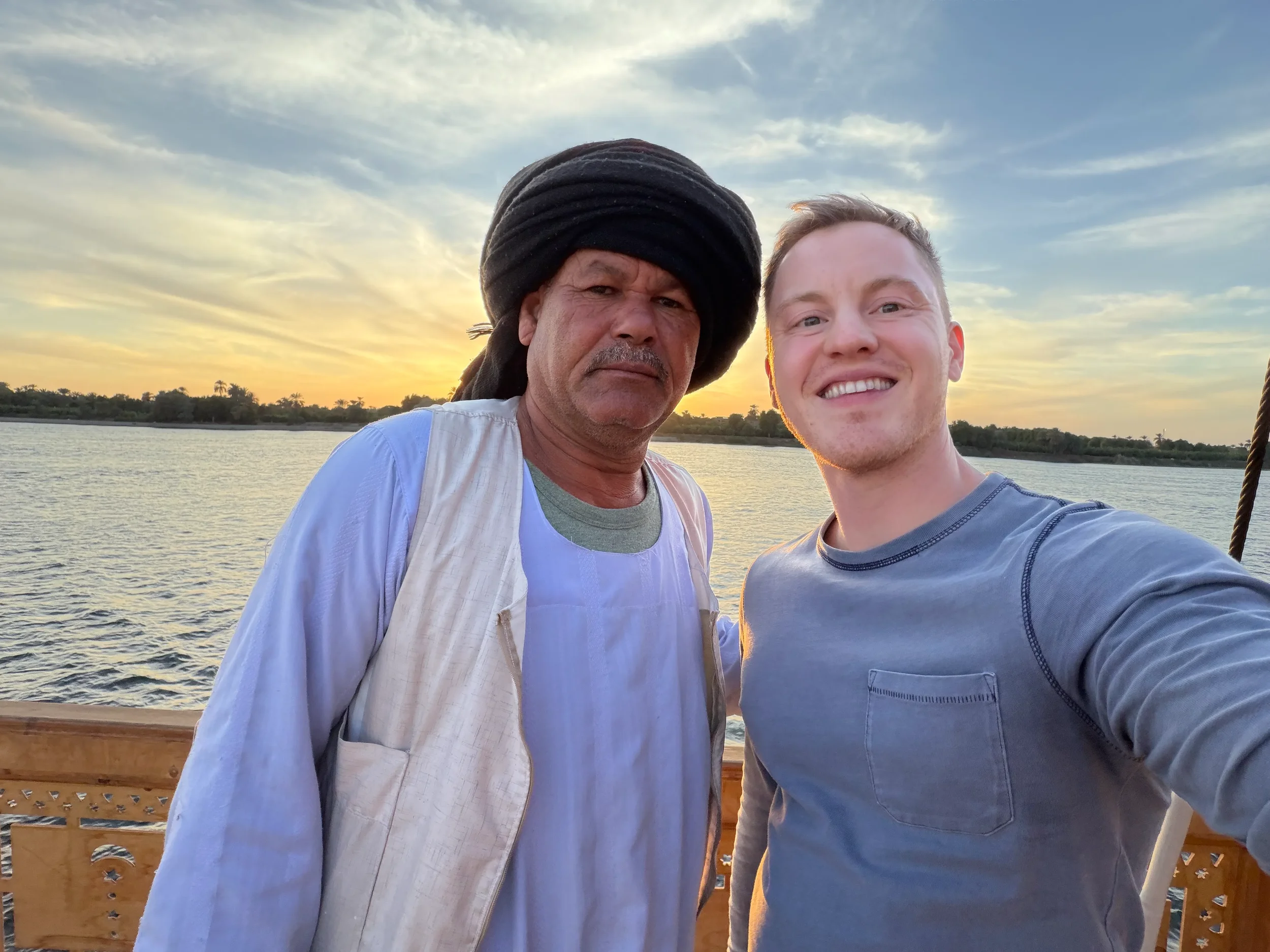
That’s me (Gus) with the captain of The Nile Dahabiya!
If you're new to my blog, my name is Gus, and I have lived in Egypt off and on for 13 years.
I speak fluent Egyptian Arabic, and for the past 4 years I've organized hundreds of Egypt tours for groups and individuals, and have personally led dozens of trips in Egypt and also Jordan.
I've been on more than 20 Nile Cruises, including trying out 7 different Dahabiya boats with my guests, so I know what to look for when choosing the best way to experience the Nile.
Wait, what is a Dahabiya?
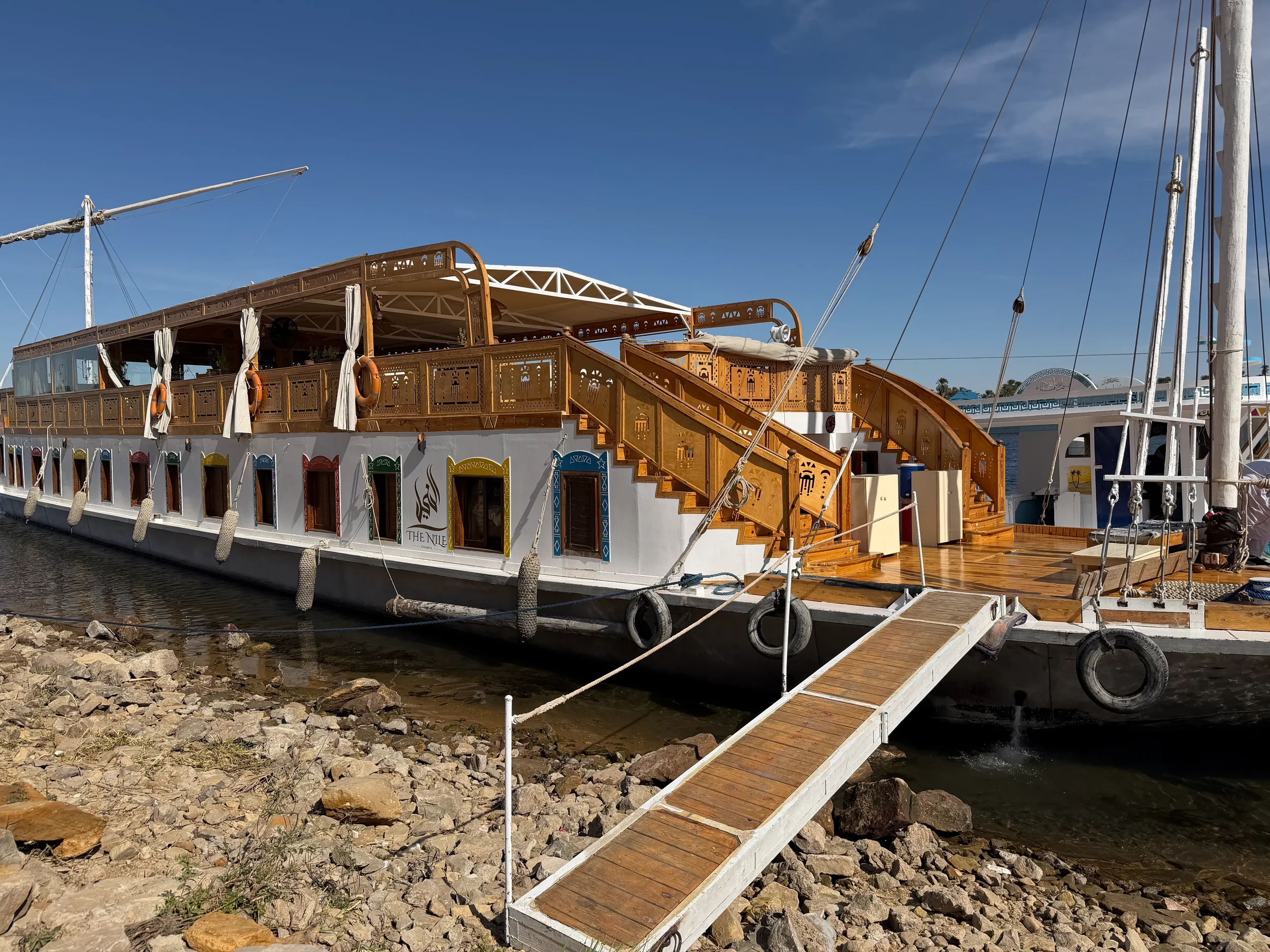
The Nile Dahabiya is a boutique sailing yacht, used for cruising the Nile
When tourists tell me they want to take a Nile Cruise and I ask them if they are considering a Dahabiya, I'm usually met by blank stares or the question, "What is a dahabiya?", so let's start there.
The word Dahabiya (also spelled "Dahabeya" or "Dahabiyah" or all sorts of varieties) means "The Golden One" in Arabic (coming from the root word "Dahab", which means "gold"), and it signifies a yacht that is used to cruise the Nile River, mostly between Luxor and Aswan.
You pronounce Dahabiya as "DAH - HUH - BAY - YUH", with four syllables. Luckily it's one of the easier words to pronounce in Egyptian Arabic!
Dahabiya boats were the way royalty, celebrities, and wealthy foreign tourists sailed on the Nile in the past - these luxury Dahabiya boats were only for the most elite travelers.
But now, there are many Dahabiyas in Egypt, offering great options for travelers of different budget levels, schedules, tastes, and travel styles.
The Nile Dahabiya - cabins, suites, and common areas
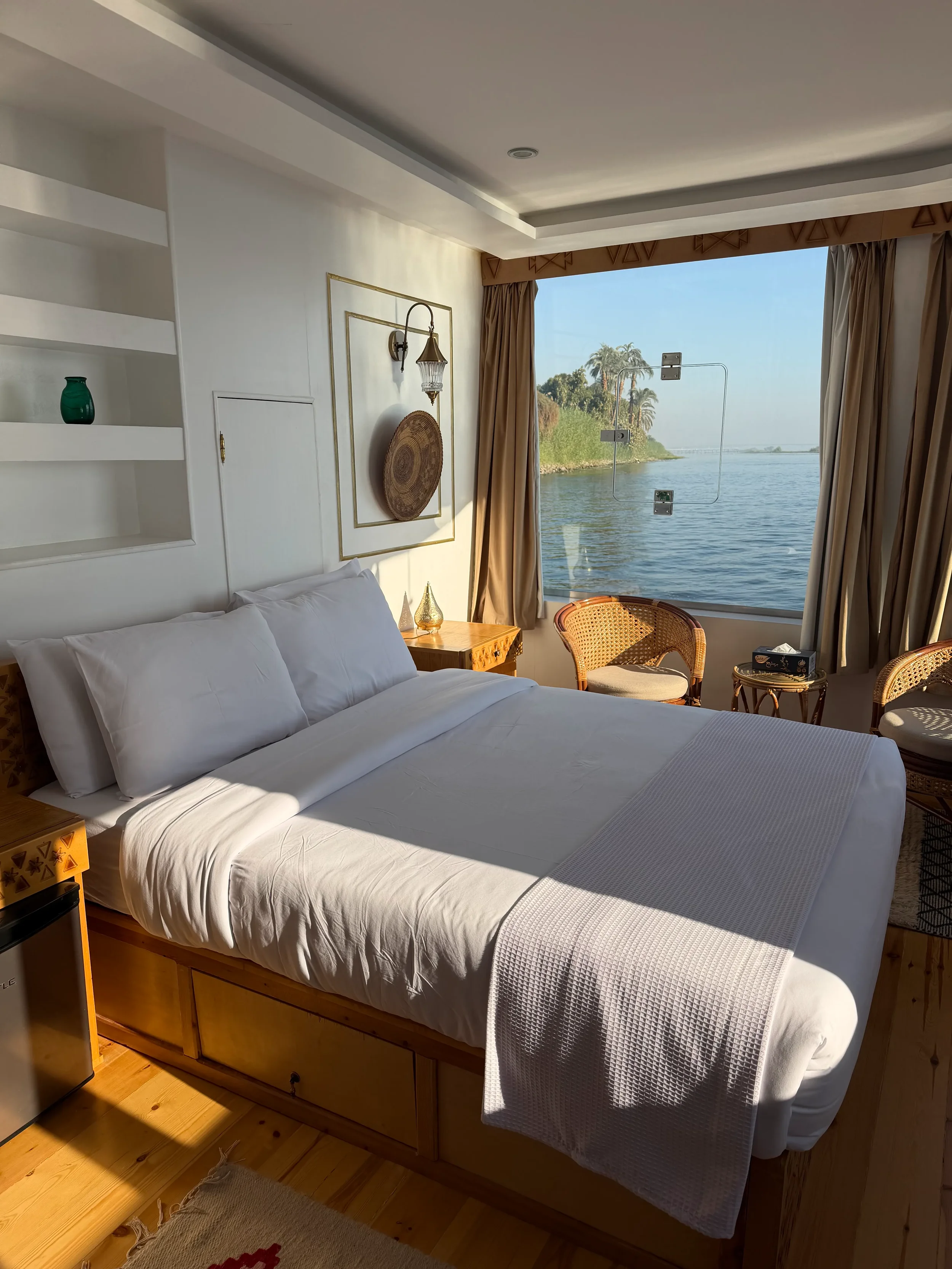
One of the two Panoramic Suites on board The Nile Dahabiya
The Nile Dahabiya is a perfect example of an authentic Dahabiya Yacht - it has tons of Nubian and Egyptian design elements (more on that later), and also lots of modern amenities like Wi-Fi, a fridge in every cabin/suite, a variety of fresh juices, coffee, tea, and soft drinks available (or they can help you order local beer or wine to take on board), and plenty of outlets to charge up devices as you relax and enjoy the views of the Nile from the many lounging areas onboard!
There are 10 standard cabins on board, and 2 suites, and the boat can hold a total of 20 people. You can either privately charter the entire boat for just your group, or you can book an individual cabin, suite, or a group of cabins/suites, and share the boat with other passengers who also sign up for the same cruising dates.
Standard Cabins on The Nile Dahabiya
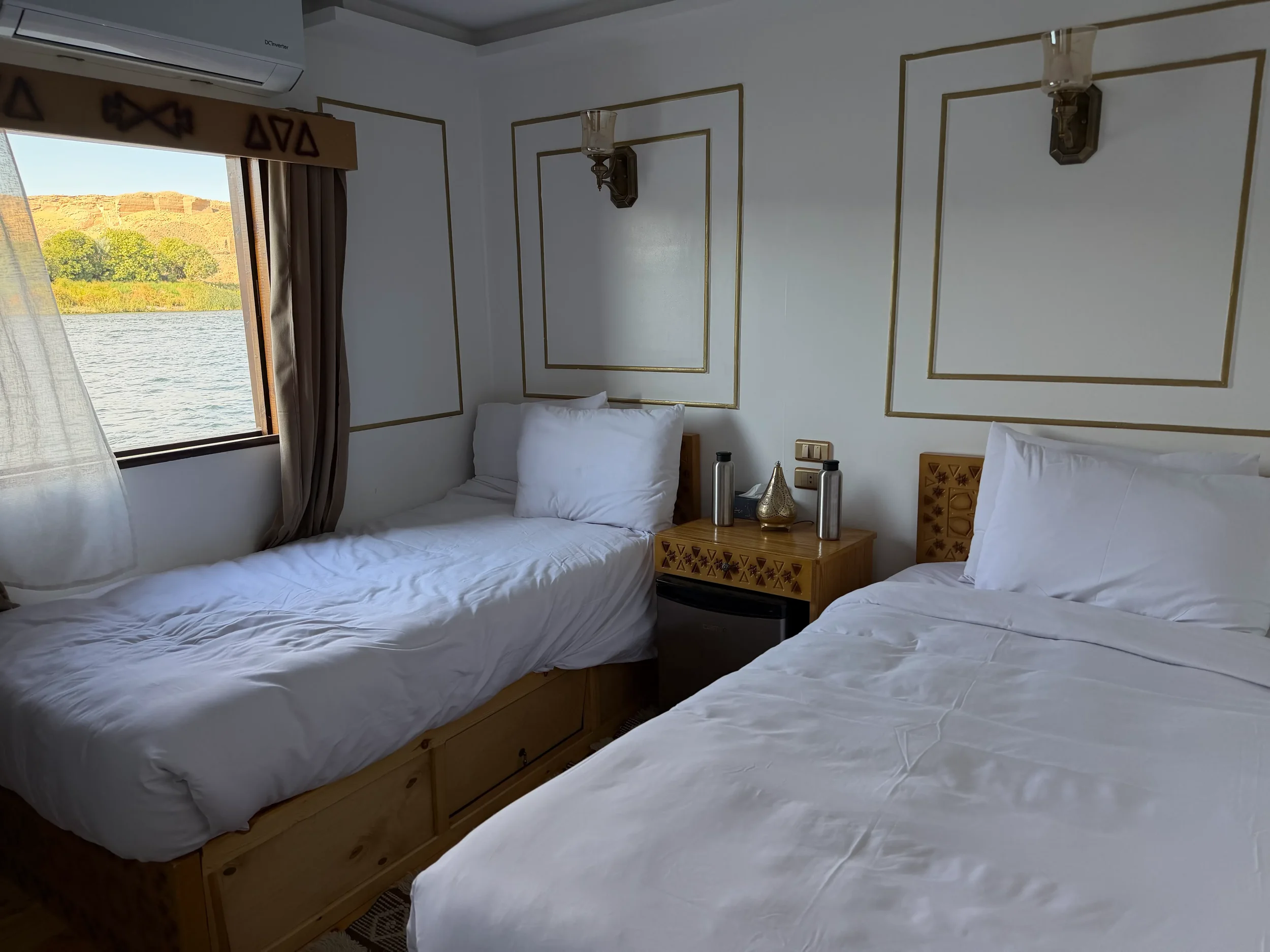
Standard Cabin on The Nile Dahabiya
The 10 standard cabins on board all have:
-Either two twin beds (which can be combined into one double bed) or a double bed
-Outlets to plug in and charge devices
-An en-suite bathroom with shower
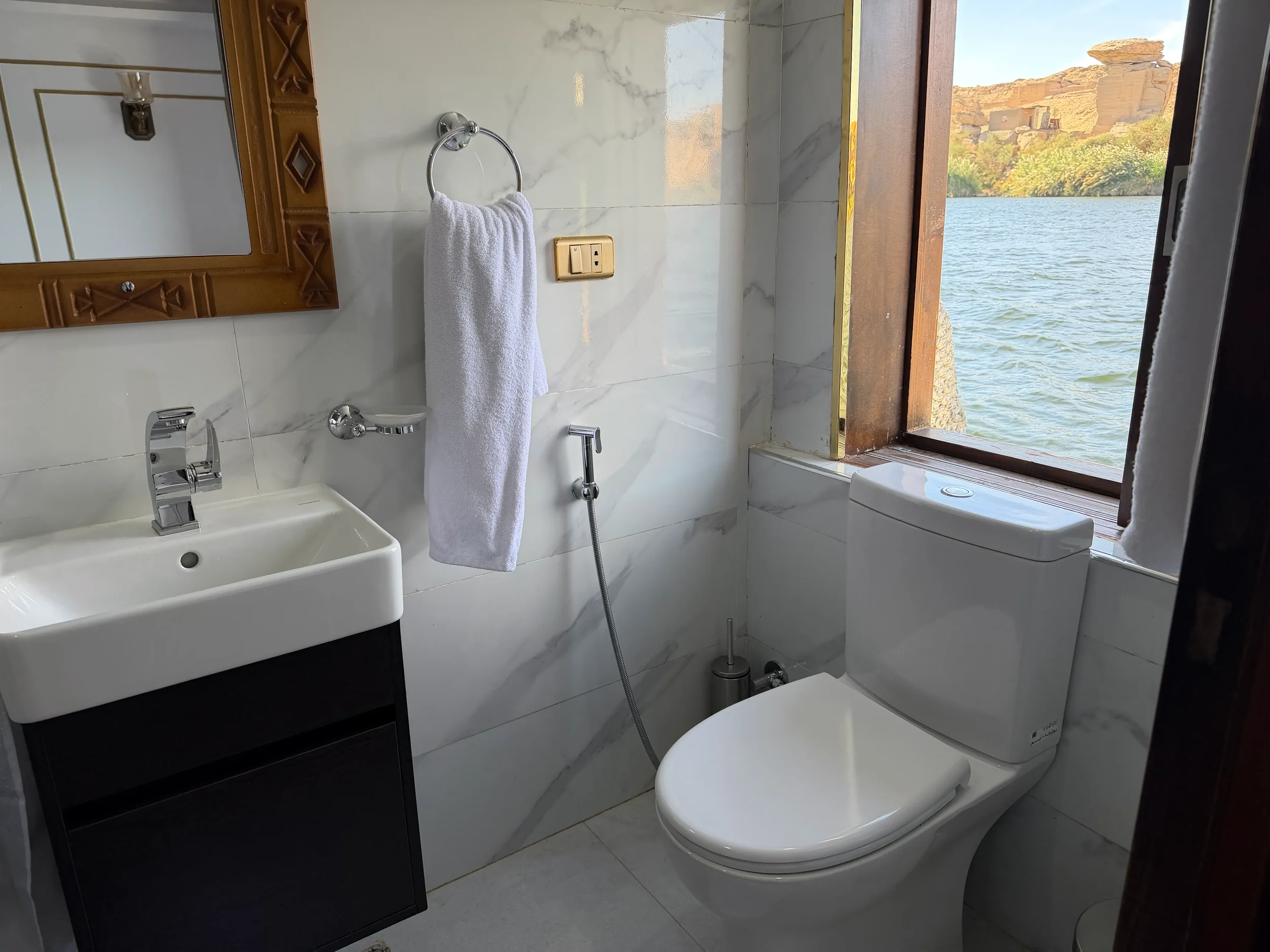
Standard bathroom on The Nile Dahabiya
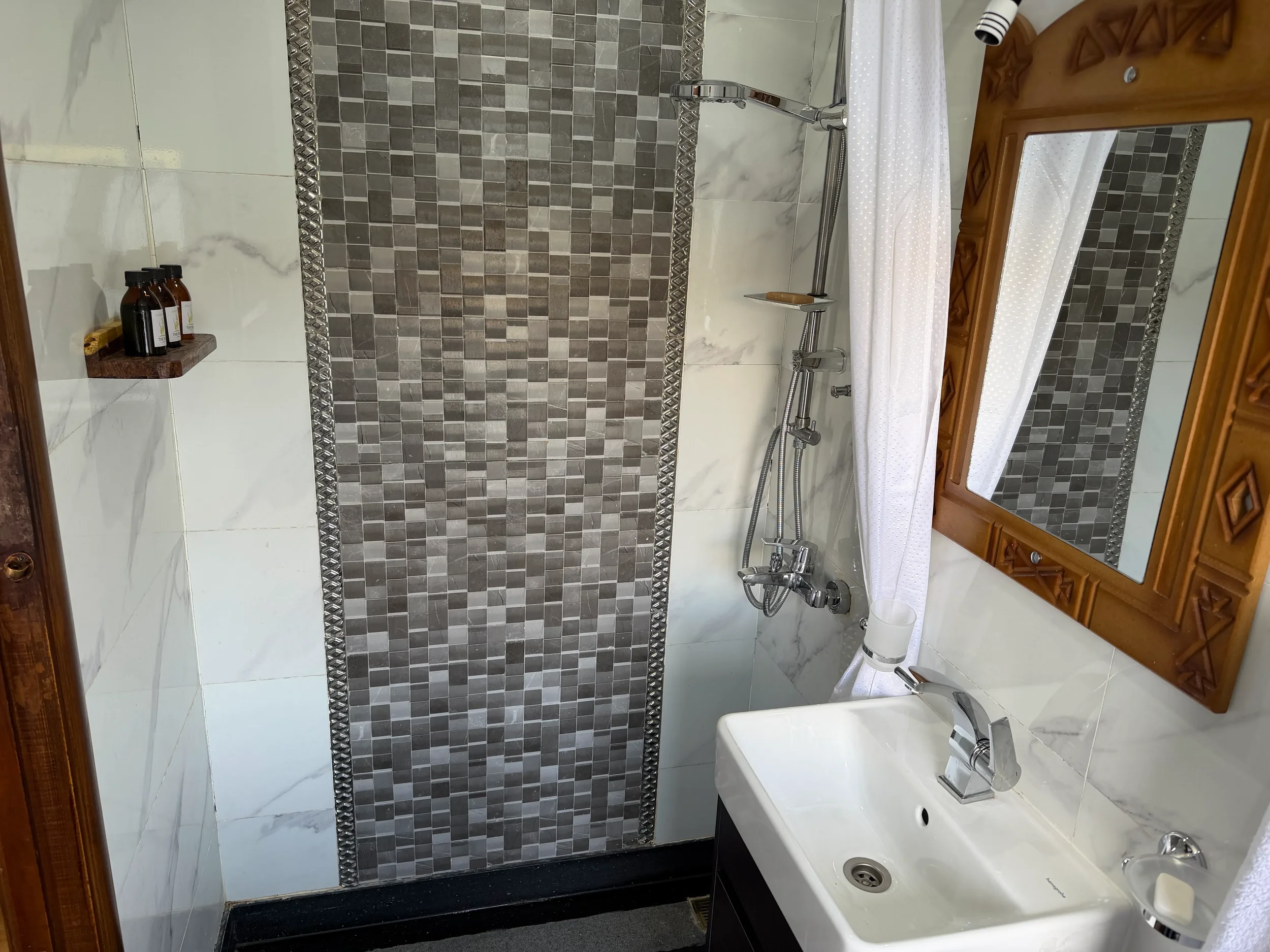
Shower area in the standard bathroom
-Windows that you can open up (with screens) directly overlooking the Nile River in both the bedroom and bathroom (not all boats have windows in the bathrooms - this was a nice touch!)
-Spacious wardrobe to store all of your clothes
-Bedside table with drawer, lamp, and a minifridge (you can bring your own alcohol on board, too!)
-Homey Egyptian and Nubian design elements and touches throughout
Panoramic Suites on The Nile Dahabiya
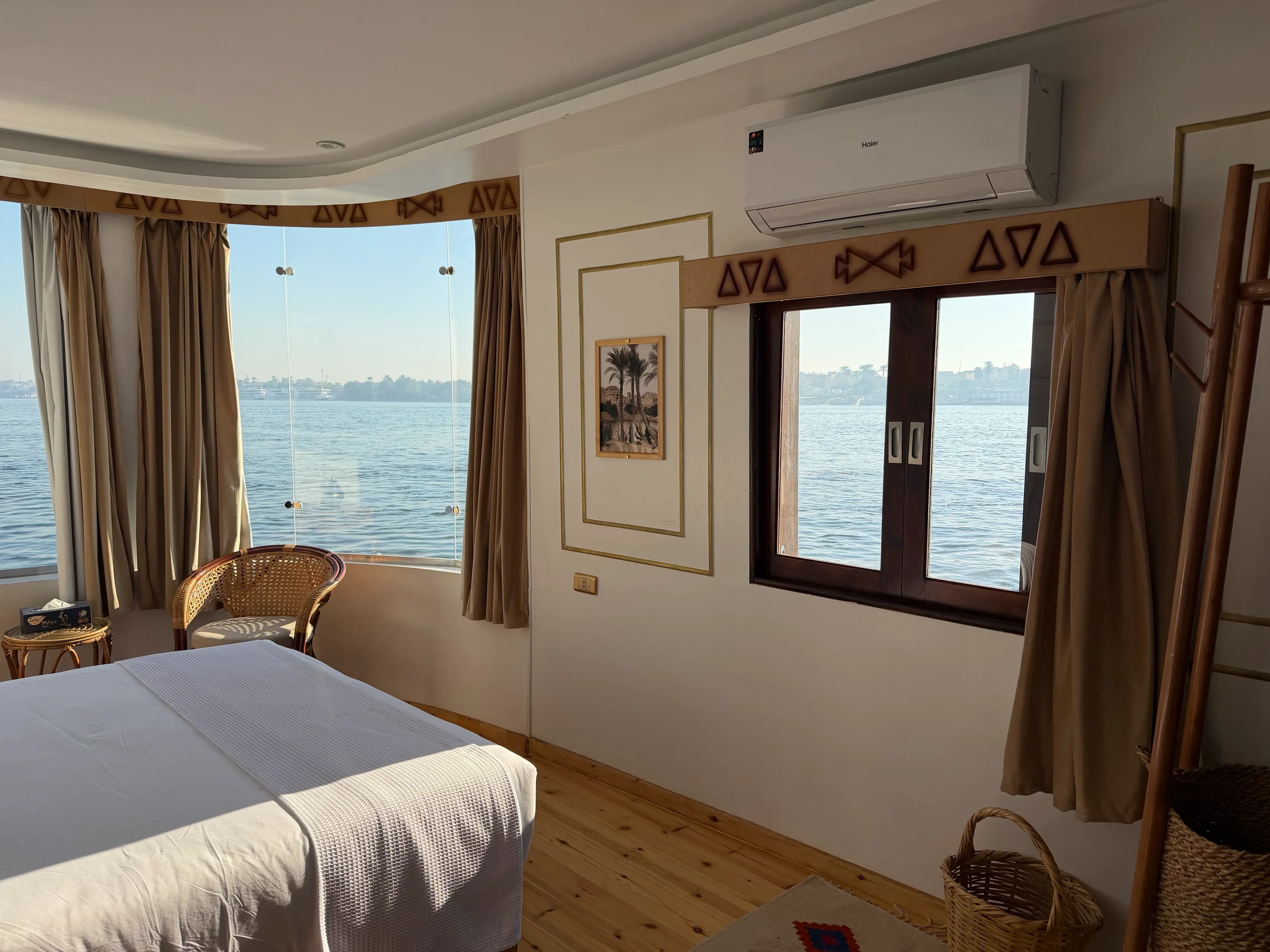
Panoramic Suite - windows on windows on windows!
The 2 Panoramic Suites on board feature:
-Panoramic windows giving you breathtaking views of the River Nile
-A large double bed, great for two people to share
-The option to add a small cot or children’s bed, for families traveling with small children
-A more spacious, en-suite bathroom, with a window and a shower
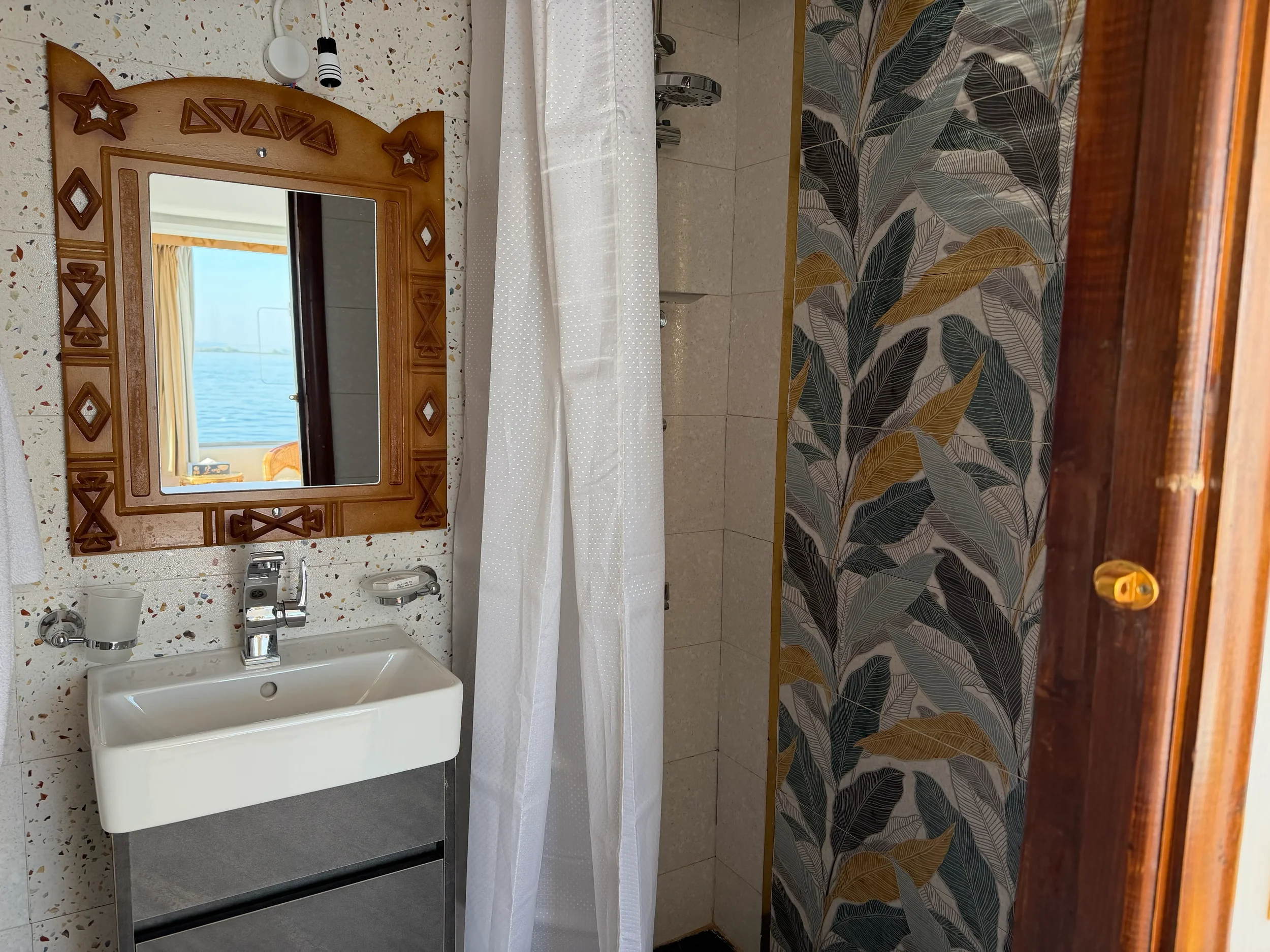
Panoramic suite bathroom with shower and sink
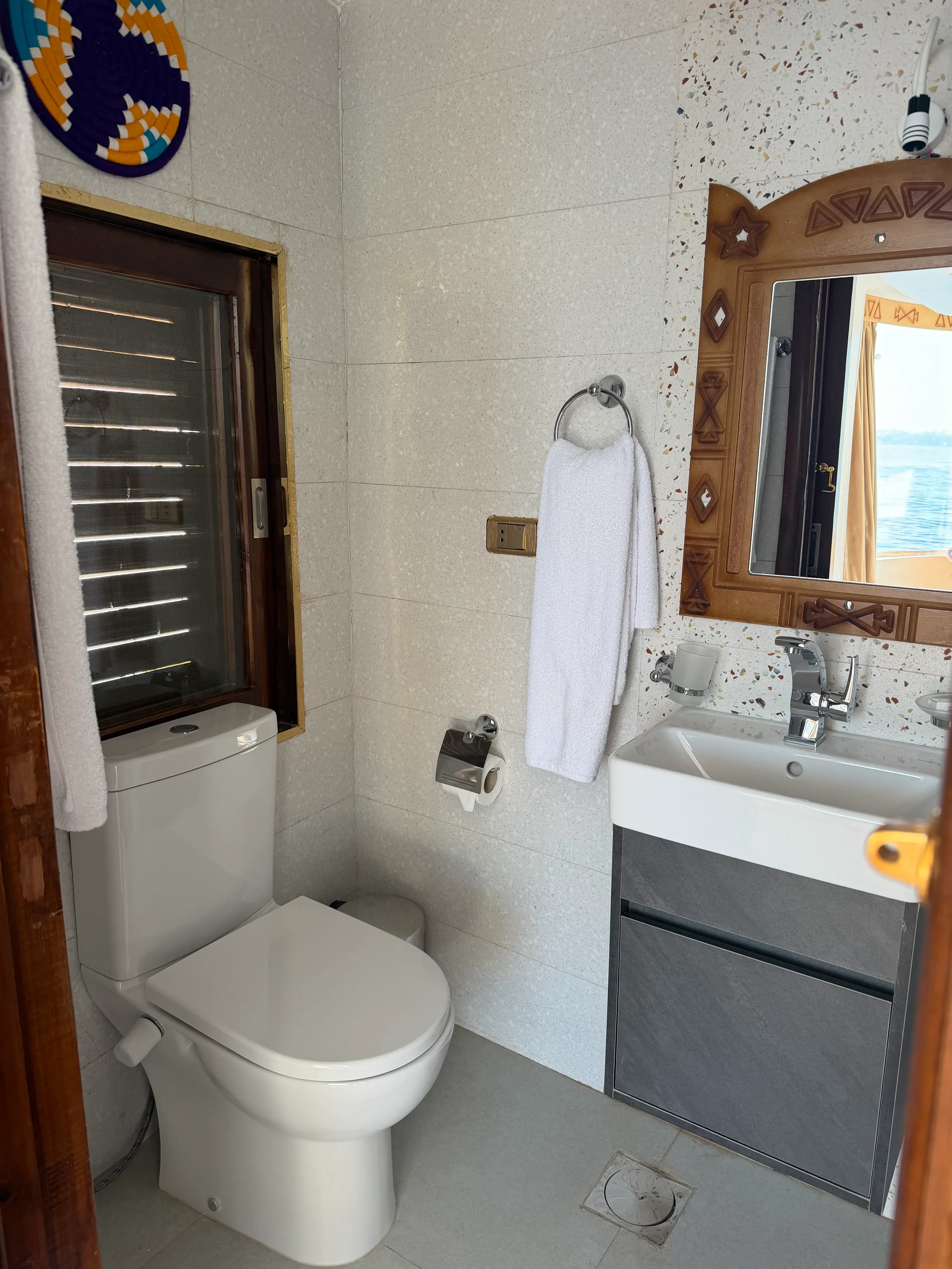
Panoramic Suite en-suite bathroom
-A small seating area right by the panoramic windows
-A spacious wardrobe and also shelving for storage
-A coat rack for hanging up clothes, towels, or jackets (you’ll want a jacket if you’re cruising the Nile November - March as it can get chilly at night!)
-Homey Egyptian and Nubian design elements and touches throughout
Common Spaces on The Nile Dahabiya
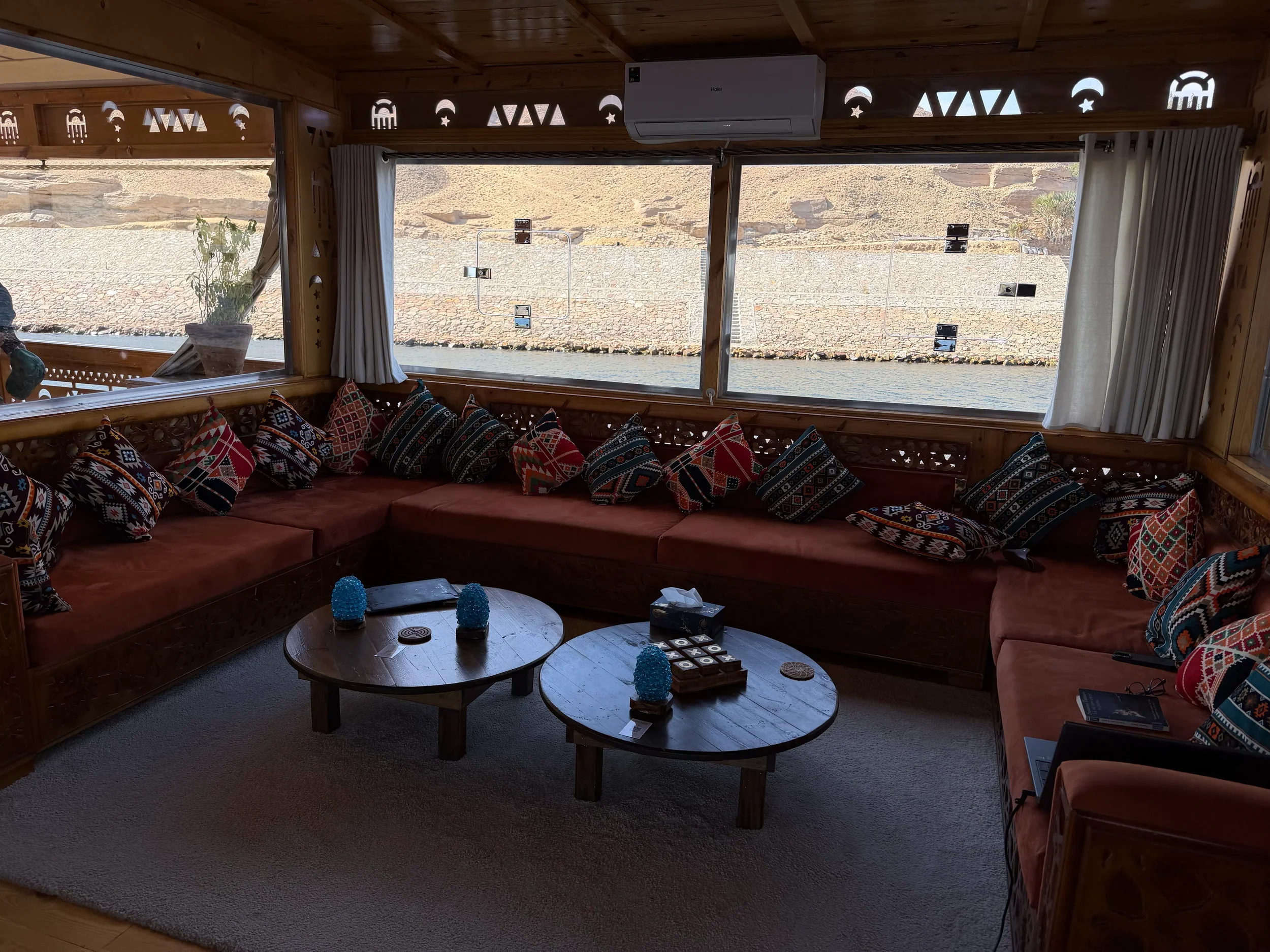
The indoor lounge is perfect for the hot months (AC) and cooler nights!
Usually on a Dahabiya Nile Cruise, you’re not spending much time in your room aside from sleeping or taking a shower, since the top deck of the boat is where you get the most pristine views of the river and the Egyptian countryside!
On the Nile Dahabiya, they have:
-Several super comfy chaise loungers in the sun, perfect for sunbathing as you cruise the Nile
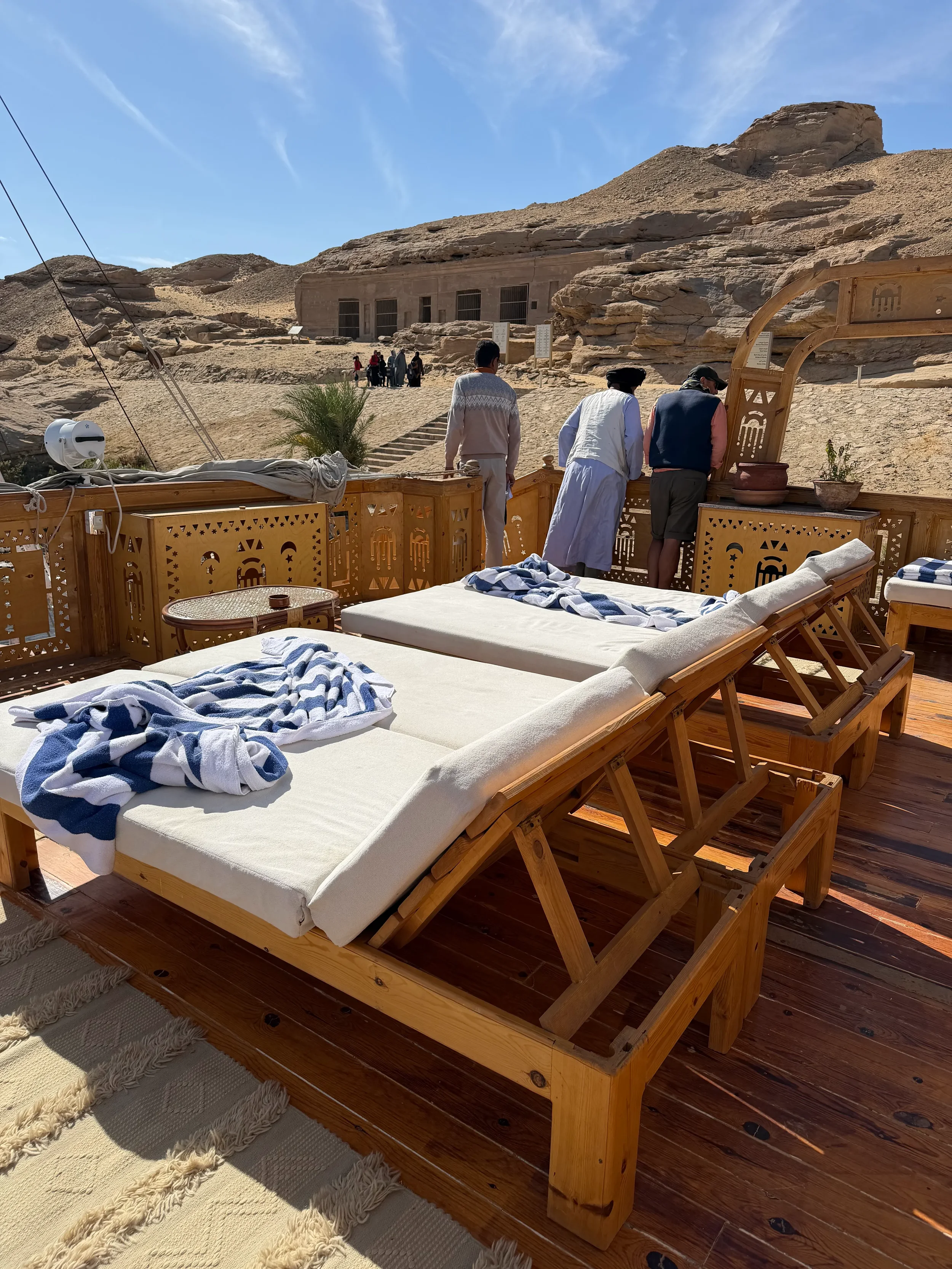
These lounges are perfect for sunbathing while cruising the Nile
-A shaded dining area with enough tables and chairs to fit more than 20 guests
-Outdoor, shaded lounge areas with tables and chairs, perfect for playing a game or reading a book
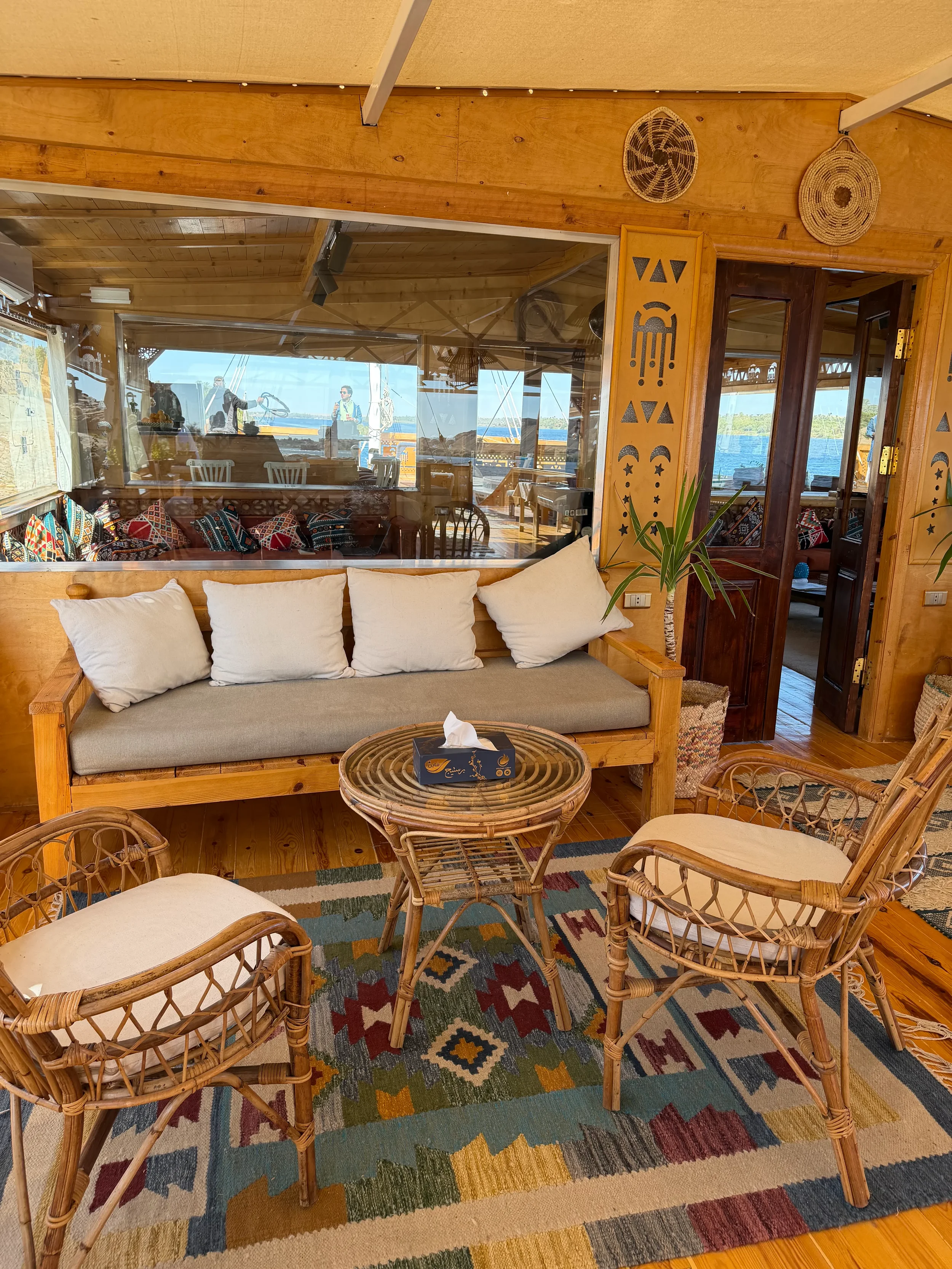
Several separate seating areas like this make it easy to find a spot to relax on board
-An indoor lounge (air-conditioned when it’s hot, and providing shelter from the wind and cooler temps in the winter), with lots of comfy couches, tons of plugs for charging up phones, and tables, perfect for sitting around playing a game of cards, or taking a snooze
-An outdoor lounge area and bar, complete with barstools - enjoy a cold beer, a delicious Egyptian lemon mint (like a minty lemonade!), or a glass of Egyptian wine!
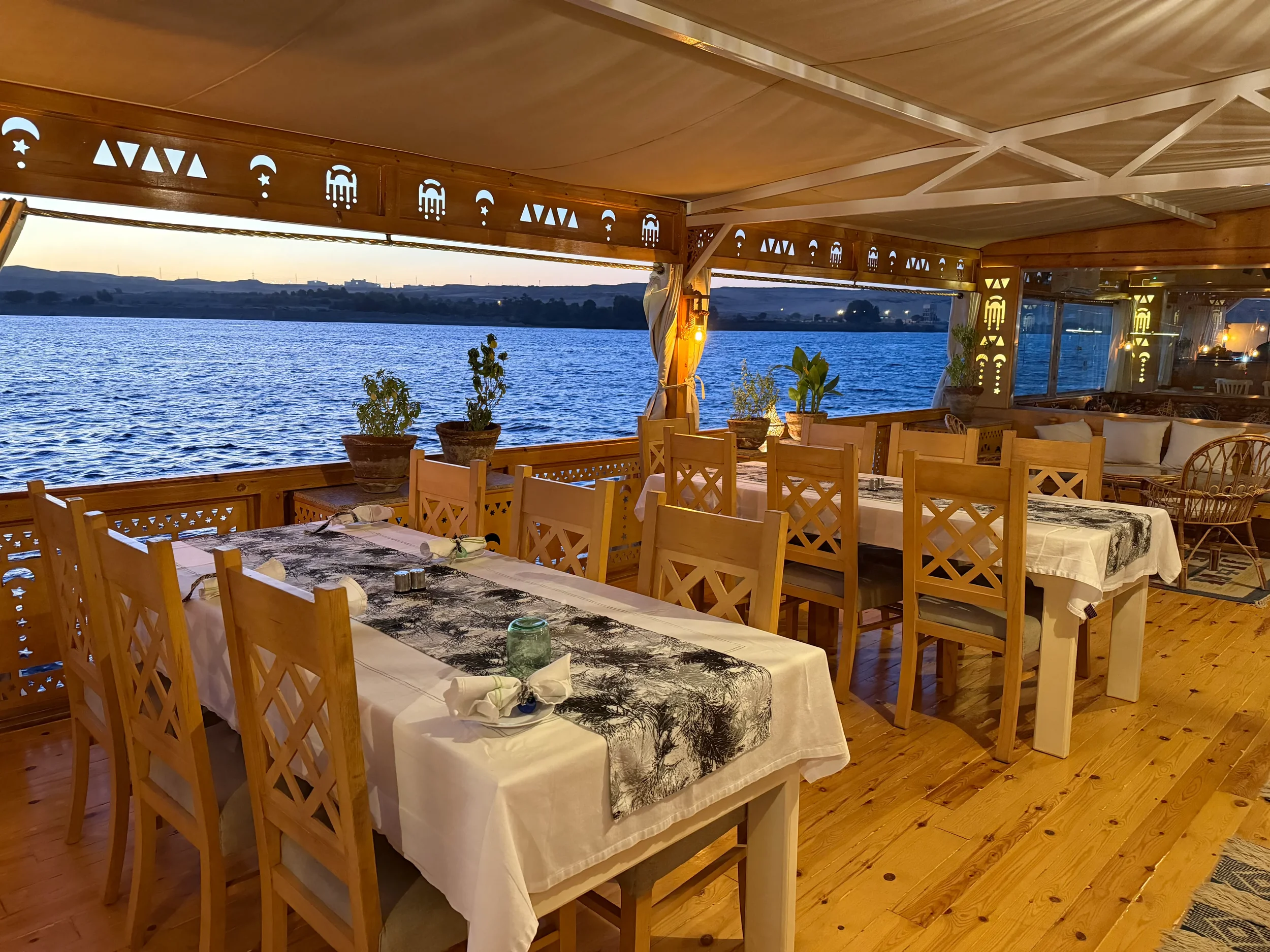
I loved the Nubian decor elements on The Nile Dahabiya, like all the woodwork that gets lit up at night!
-A super Egyptian-style back deck complete with low cushions and tables, perfect for hanging out while you observe the captain steering the boat and watch the agricultural fields, villages, and small towns along the banks of the river float by
Quick question - does a Dahabiya travel by sail only?
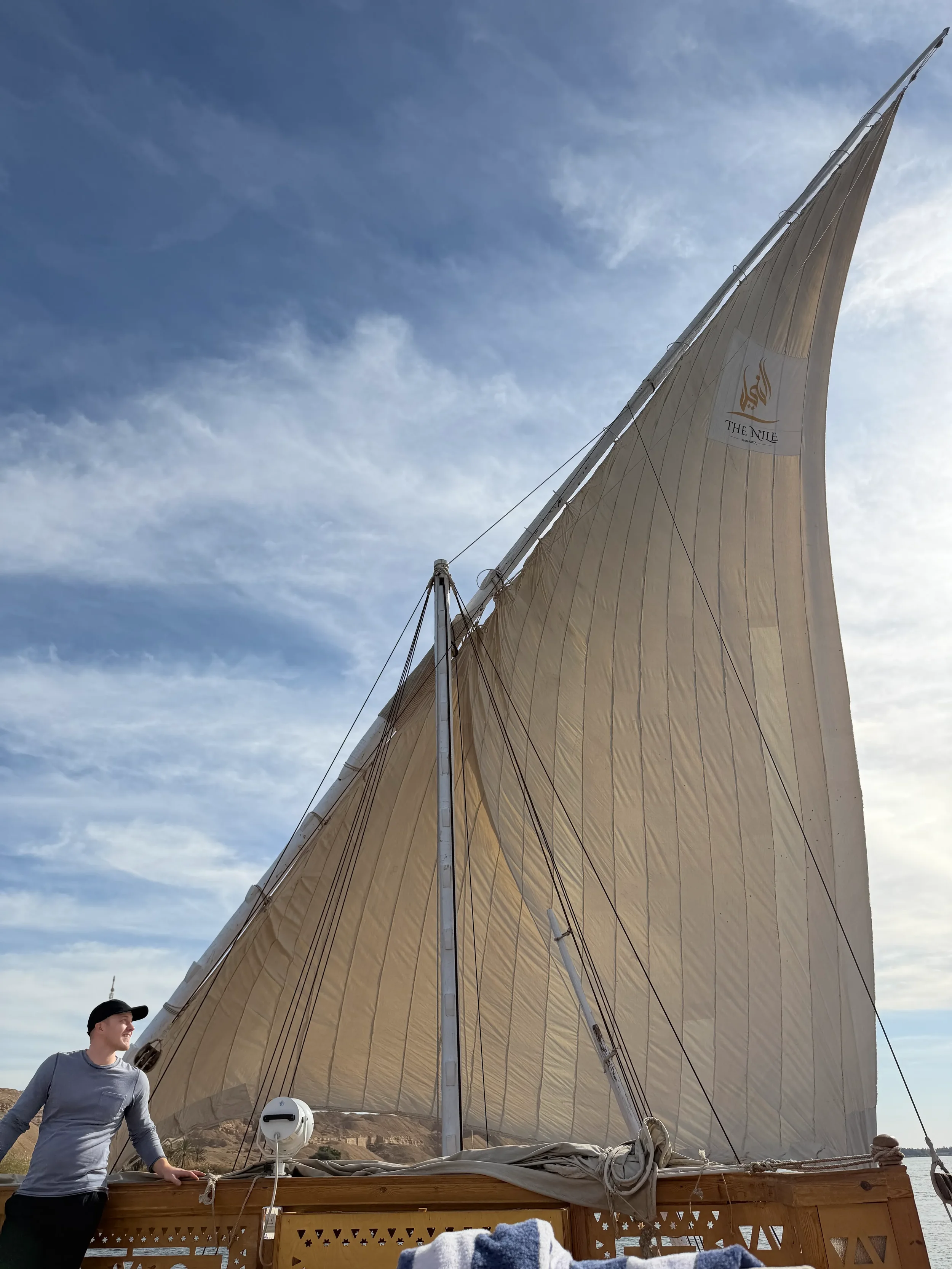
Sometimes you will actually sail on a Dahabiya, but most of the time you are pulled by a tugboat - otherwise it would take forever to get where you need to go!
This is an important point, so I want to put it at the top! Dahabiya boats do not have a motor (they have electricity by using an onboard generator), so they only move one of two ways - either by using their sails, or by getting pulled by a small tug boat.
If you are cruising from Luxor down to Aswan, the wind is generally favorable for using the sails for a little bit during the journey, however, most of the time you will be pulled by a tug boat, in order to stick to the itinerary of sightseeing along the river. After all, you want to arrive in Aswan in time to see all the sites there (and maybe go down to Abu Simbel Temple)!
From Aswan to Luxor, the wind is generally less favorable, so your captain may use the sail just once or twice, more for the show of it and for getting to take amazing pictures and videos.
The small tug boat at the front does little to damper the experience of cruising the Nile on one of these boutique yachts, and every evening you'll be snugly docked on either a small island or remote section of the Nile, perfect for peace and quiet and tranquil views.
Why you should choose a Dahabiya instead of one of the giant Nile Cruises
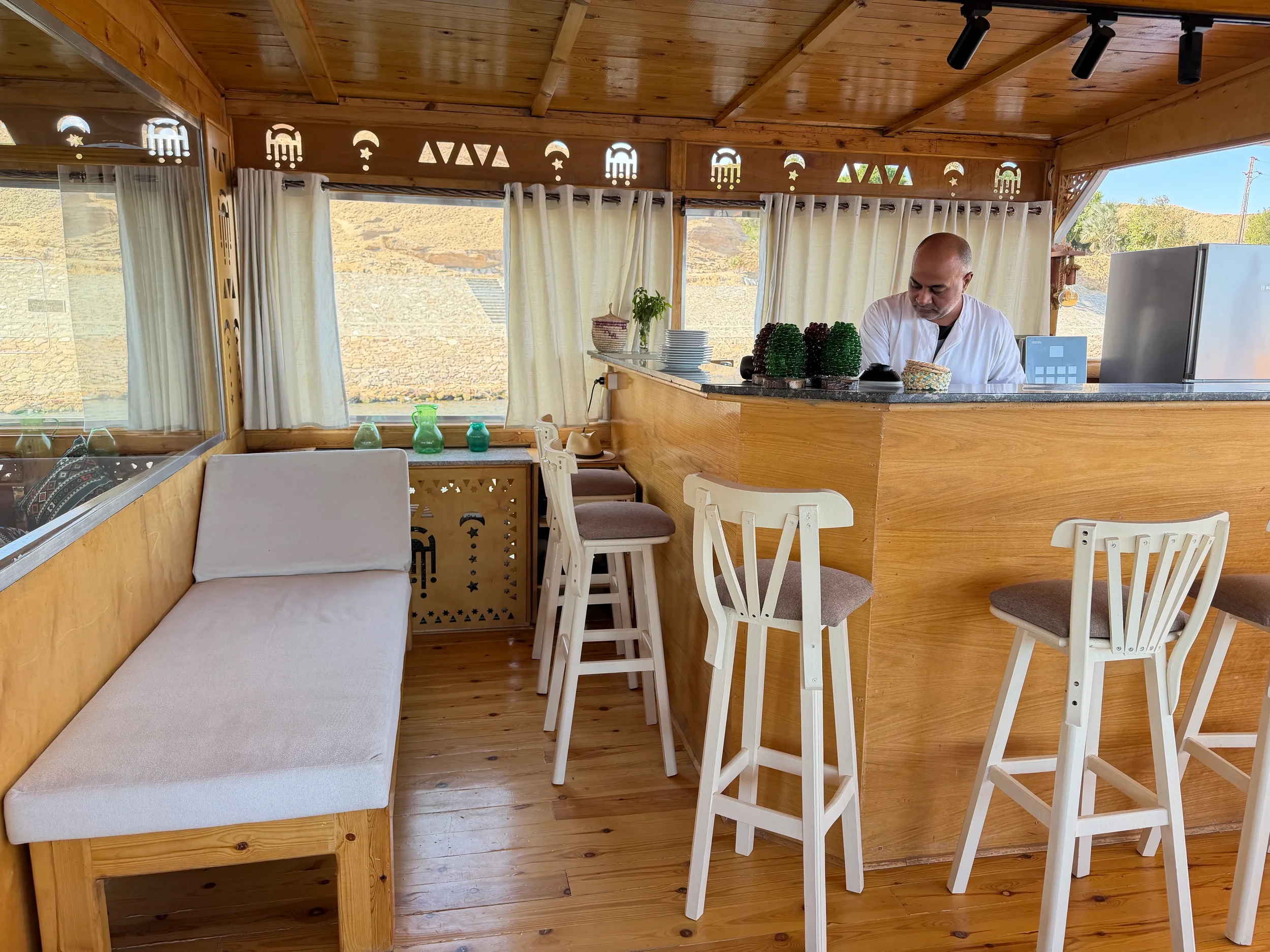
The amazing, personalized service is one of the best parts of a Dahabiya Nile Cruise
There are several reasons why you should choose a Dahabiya instead of one of the large Nile Cruise ships:
Fewer crowds
Dahabiya boats follow their own schedules, which means they intentionally visit sites when they know the giant Nile Cruise ships won't be there.
Large Nile Cruise boats, holding anywhere from 50 - 150 passengers, are forced to follow the same breakneck pacing and schedule, which means that dozens of them will dock at specific sites at the same times, leading to hundreds of tourists swarming places like Kom Ombo Temple all at once.
A dahabiya, on the other hand, will purposefully circumvent these problem times, leaving guests a chance to explore places like Edfu Temple, and other highlights along the river with far fewer tourists around.
Dahabiyas visit places the large ships can't
Giant Nile Cruisers cannot dock at places like Gebel el Silsileh (an ancient rock quarry) or El Kab Tombs (amazingly well-preserved ancient Egyptian tombs) - these hidden gems are only available to Dahabiya yachts.
And you don't just visit ancient sites on a Dahabiya cruise - these small boats can also stop at agricultural areas to walk around and explore, sandy beaches to go for a swim in the river, or local villages to interact with everyday Egyptians.
Dahabiyas have better service
A Dahabiya yacht will usually only have 7 - 12 cabins (there are only 10 cabins and 2 suites on The Nile Dahabiya), so they can only take 14 - 24 guests (the Nile Dahabiya takes a maximum of 20 guests).
This means that the staff on board, like your personal chef, serving staff, housekeeping, the boat captain, etc. give much more personalized service, and foster genuine connections with you when you're on board.
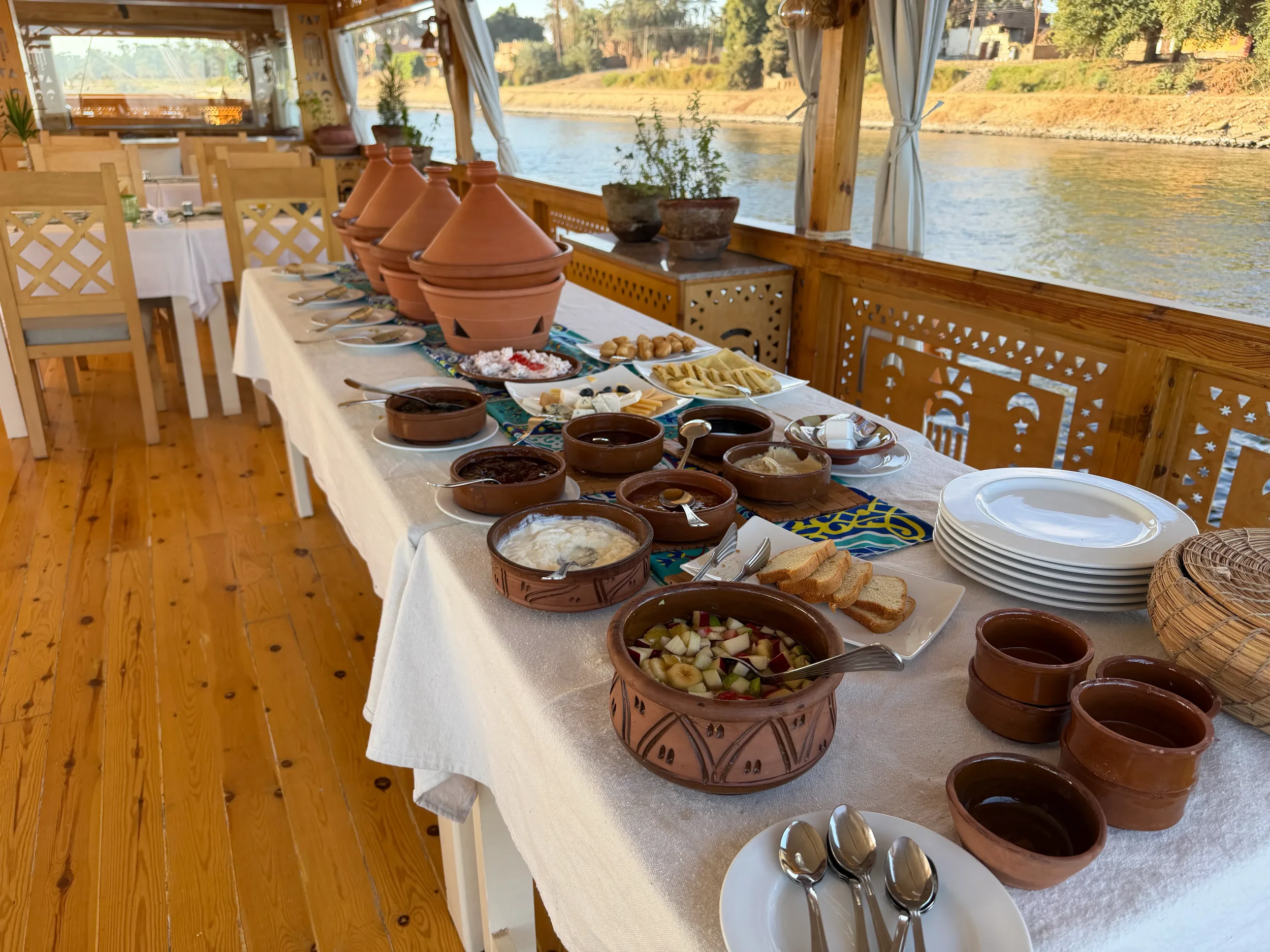
A smaller group of passengers and a personal chef make the food on a Dahabiya much better than a large cruise
There’s better food on a Dahabiya
The giant buffets on the large Nile Cruise ships aren't the best - I much prefer the vibe of eating every meal prepared by our personal chef on board a Dahabiya. The Nile Dahabiya had some of the best food I've had on a Nile Cruise (more on that and mouth-watering photos below), so it made mealtimes one of the highlights of our cruise.
What makes The Nile Dahabiya stand out from other Dahabiya yachts
There are tons of Dahabiya Nile Cruise options out there, but here is what stood out about The Nile Dahabiya, considering I've been on over 20 Nile Cruises, including on 7 different Dahabiya yachts:
The Nile Dahabiya has authentic Egyptian and Nubian design and touches
The Nile Dahabiya features authentic Egyptian and Nubian design, with special touches throughout the boat. I loved the colorful, Nubian-inspired details around the windows on the boat's exterior, and the beautifully carved wooden paneling throughout the boat gave it lots of Nubian charm.
Lots of the boat's touches (things like cups, placemats, linens, furniture) were locally sourced in Egypt, making you feel like you're on an Egyptian boat, and not just a basic cruise ship.
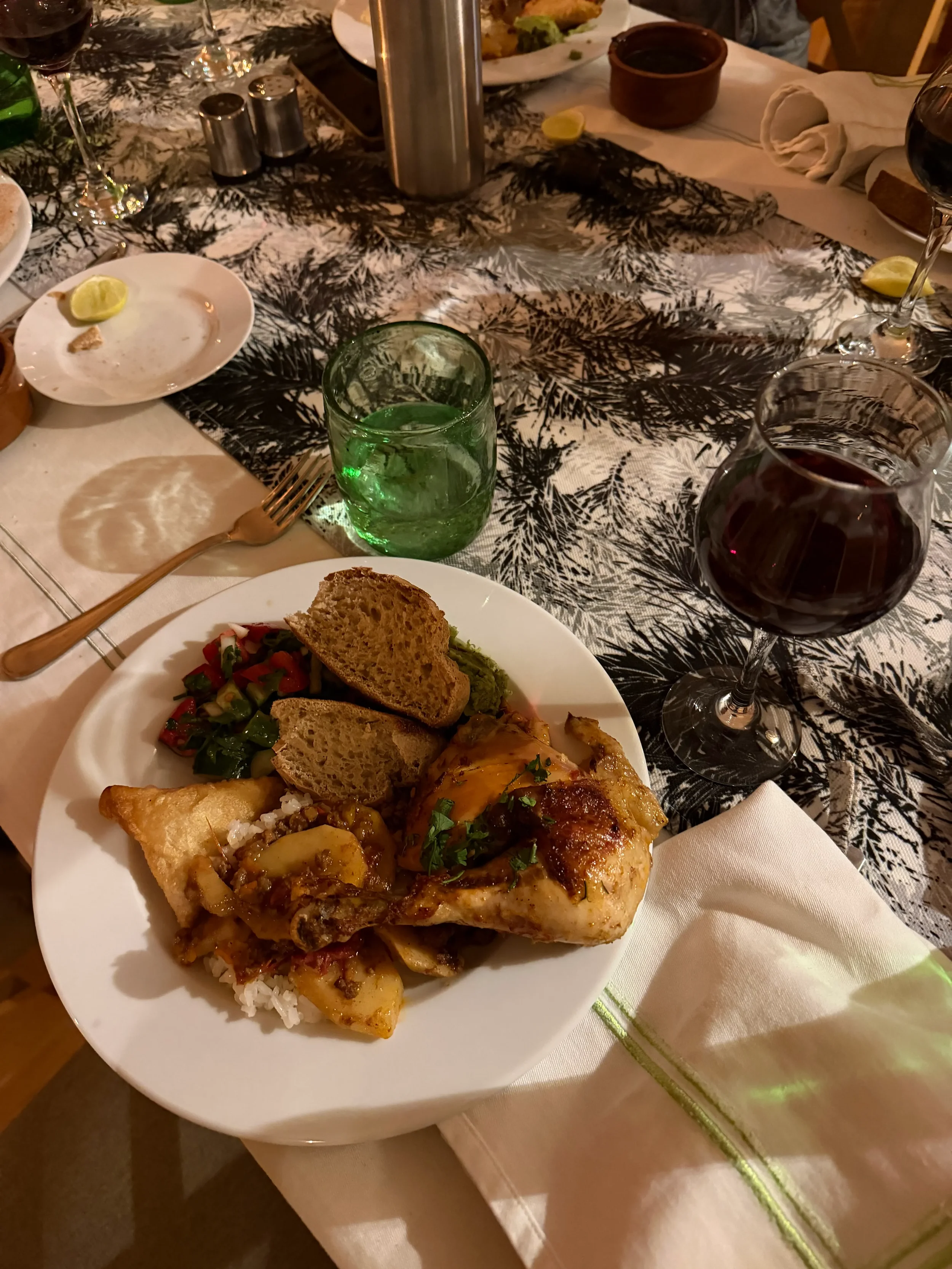
Our personal chef on board made every meal special!
There’s an amazing personal chef on The Nile Dahabiya!
Compared to the other Dahabiya boats I've been on, the food on The Nile Dahabiya was a highlight. Our personal chef did an amazing job cooking up all sorts of Egyptian dishes, and each meal brought something new.
Breakfast was also superb, and featured all the Egyptian staples - eggs, fuul (stewed fava beans), falafel, and lots of fresh fruits, vegetables, jams, spreads, cheeses, bread, and more!
Great communication and excellent service
From start to finish, communication with The Nile Dahabiya staff was excellent. After reaching out via email, my reservation was confirmed in a matter of days, all of my emails and Whatsapp messages were replied to professionally within 1 - 2 business days maximum, and all of the expectations surrounding the cruise and our itinerary were crystal clear.
And any time we needed anything during our time on board, we had an English-speaking boat manager to take care of whatever we needed.
In addition to this, the service staff on The Nile Dahabiya exuded warmth, hospitality, and kindness, and had a great sense of humor. They also made sure we had what we needed, and went out of their way to anticipate our needs as well.
The Nile Dahabiya follows a unique itinerary
Not many Dahabiya Yachts stop at the El Kab Tombs or go to a local village on Ramady Island - these special touches were different from what I've experienced on other Dahabiya yachts, and made The Nile Dahabiya stand out.
3-night, 4-day Nile Cruise from Aswan to Luxor on The Nile Dahabiya: My Experience
Now let’s jump into my personal experience on The Nile Dahabiya, when I took a 3-night, 4-day Dahabiya Nile Cruise on this gorgeous yacht, starting in Aswan and finishing up in Luxor.
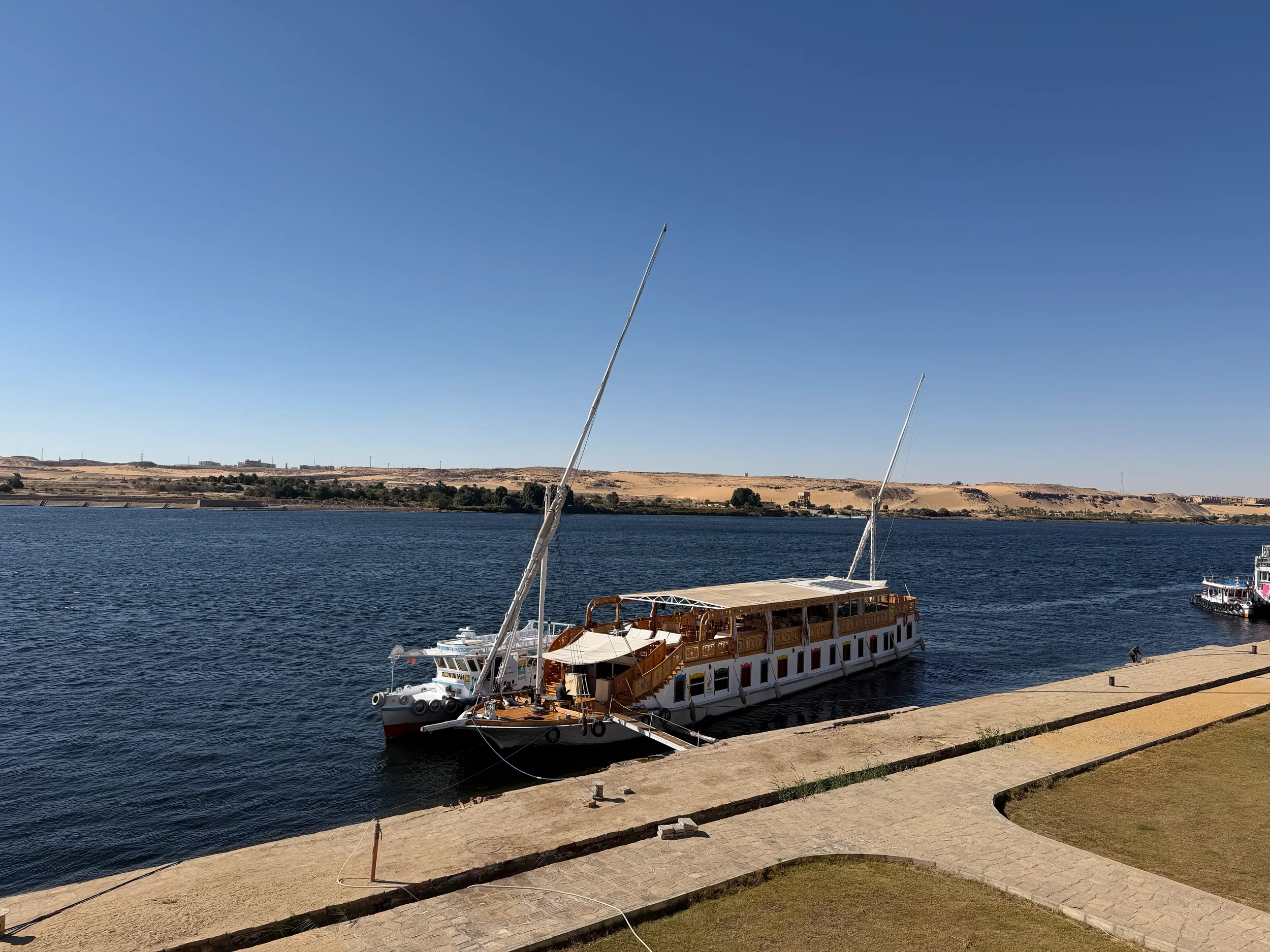
Our dock from the first day of the cruise in Aswan
Day 1: Flight from Cairo to Aswan, extra visits, embarkation and lunch, Phlae Temple
I booked an early morning flight from Cairo down to Aswan on our embarkation day - we left Cairo International Airport at 6am and arrived in Aswan around 7:30am. Right away we were met by a representative from The Nile Dahabiya, who made sure we got our baggage, helped us through the airport, and got us out to a private car.
While we booked the flight ourselves and took care of the portion in Cairo Airport, from the moment we arrived in Aswan, the team from The Nile Dahabiya took care of the rest!
Since we arrived early and embarkation was not until 12pm, we arranged in advance for The Nile Dahabiya to take us on some extra visits before boarding the boat and having lunch.
We started at Kalabsha Temple - this small island houses several temples that were moved in order to save them from being flooded after the construction of Aswan’s High Dam created Lake Nasser, the largest reservoir in the world.
At the Kalabsha Temple dock (that’s right, you have to take a motorboat to visit this seldom-seen temple!) we met Ahmed, our Egyptologist guide. Ahmed is one of the many local Egyptian Egyptologist guides who come on board The Nile Dahabiya to lead guests through the ancient and modern history during the Nile Cruise.
Ahmed helped us get on a motorboat and after a few minutes, we arrived at Kalabsha Temple, and explored the island while getting a briefed about the ancient Egyptian history.
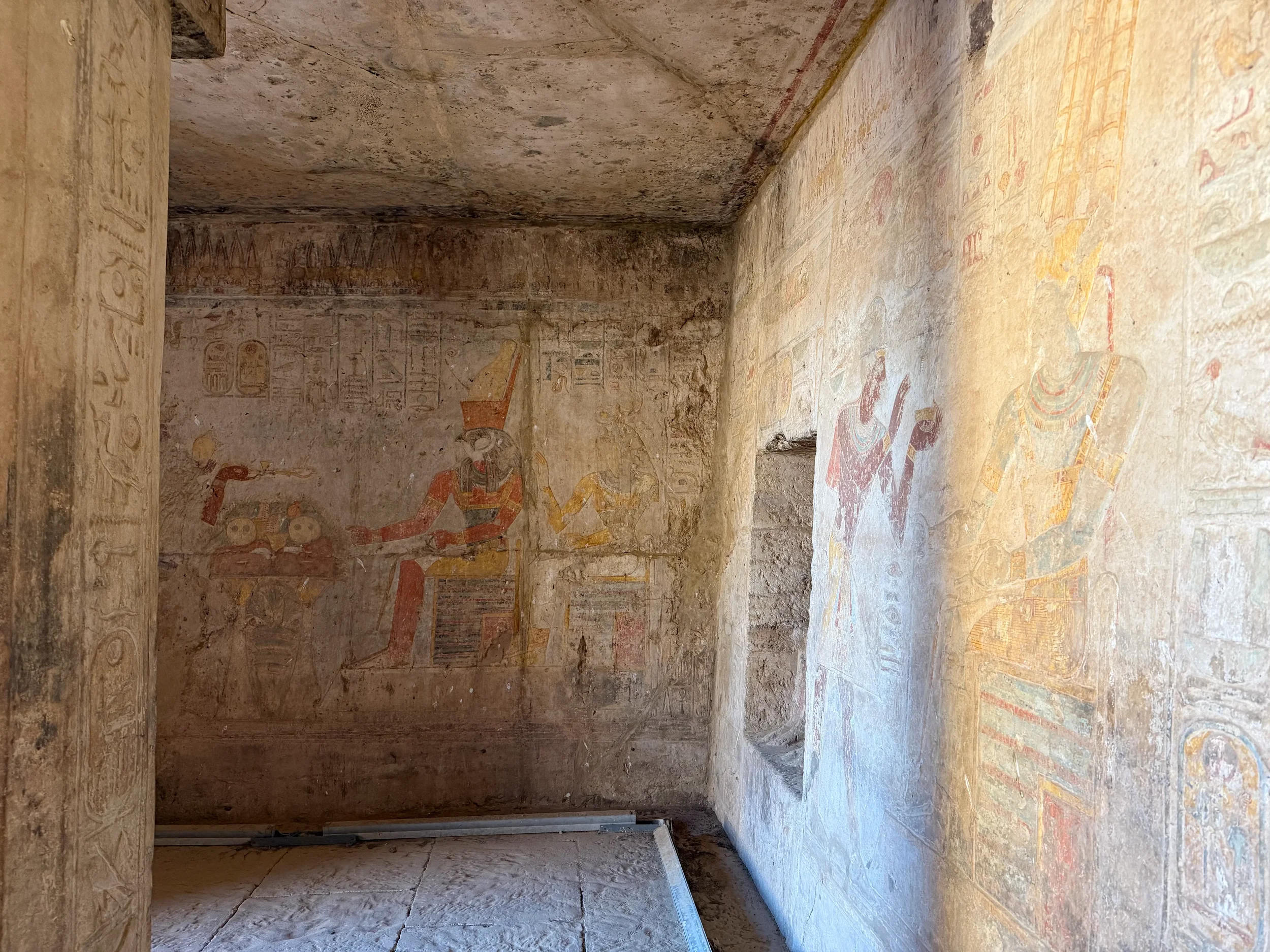
We booked an extra visit for Kalabsha Temple the morning before embarkation and we were the only people there!
It was amazing that during the hour we were on the island exploring, there were absolutely no other tourists there. Not even one. It was a great start to our tour and Nile Cruise!
After Kalabsha Temple Ahmed took us to the High Dam, which isn’t the most beautiful dam in the world, but it’s definitely an important piece to the modern history of Egypt. We got to look out over Lake Nasser, the largest human-made lake in the world.
Then we got transferred to The Nile Dahabiya where we had a delicious lunch (seriously, the personal chef on board is amazing!) and met the other tourists who were on board, before starting the official program of the 4-day itinerary.
All together now, we went with Ahmed to our first official visit, Philae Temple. This temple is also on an island, so Ahmed got us all on a motorboat, and we explored this ancient Egyptian Temple with Ahmed guiding us through the history.
One of the best parts of a cruise on The Nile Dahabiya is visiting places with almost no crowds, and there weren’t many people at Philae Temple at all - we were able to go right into the sanctuary of the temple, take tons of photos, and enjoy the beautiful views.
On the drive back to The Nile Dahabiya from Philae Temple, we had requested to have some beer and wine on board, so we stopped at a local Egyptian liquor store in order to stock up on what we wanted for the cruise. Since all the cabins and suites on board have fridges, it was easy to store our beer and wine until we were ready to enjoy it!
Once back on board we started cruising north, and enjoyed our first sunset on the water followed by a superb dinner
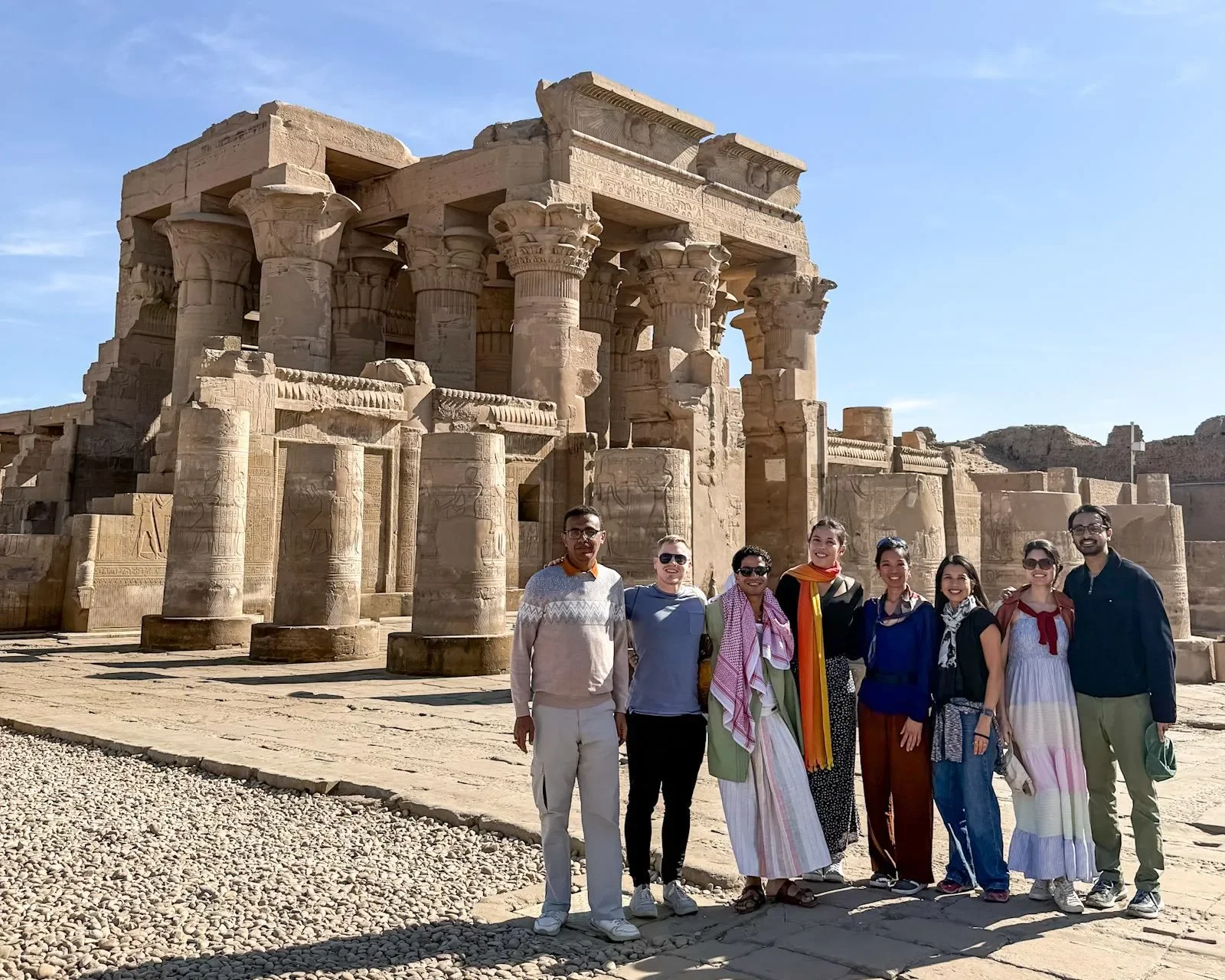
There were no crowds at Kom Ombo Temple - one of the sites that gets overrun when the big cruisers are there. On the left is Ahmed, our amazing Egyptologist Guide.
Day 2: Kom Ombo Temple and Gebel el Silsileh
We woke up on our second day on The Nile Dahabiya and found we were docked alongside an island in the Nile River, complete with birds, cows grazing, and fishermen going by.
Breakfast was enjoyed while we started cruising north, and after our meal we arrived at Kom Ombo Temple.
Once, I visited this temple on a giant Nile Cruise ship, where there were over 400 tourists all crowding in, trying to see this ancient temple’s most important reliefs, like the ancient Egyptian calendar and ancient medical tools.
Today, there were only about 50 tourists total at the temple, and we were able to walk right up to all of the amazing reliefs, snap all the pictures we wanted with no one in the way, and get a great historical brief by our Egyptologist guide.
Since Kom Ombo is directly on the Nile, we simply walked 5 minutes back to The Nile Dahabiya once we were done seeing the mummified crocodiles at the small museum inside the temple complex, and then we were cruising again!
We had lunch while enjoying the pristine countryside along the Nile - every meal brought something new, and the chef did Egyptian food justice, cooking up all the main staple dishes. I’ve been eating Egyptian food in local homes, restaurants, hotels, and cruise ships for 13 years, so I know some good Egyptian food when I have it!
After lunch we stopped at Gebel el Silsileh, one of two stops during our time on The Nile Dahabiya that the large cruisers can’t even visit - there’s no dock big enough for those massive ships!
Gebel el Silsileh is an ancient rock quarry, and it’s from here that ancient Egyptians got a lot of the stones they used to later build their temples.
We explored the small temples and shrines in the area, and looked at how the ancient Egyptians cut out gargantuan stone blocks and loaded them into boats to float them up or down river to different building sites.
Back on board, we enjoyed some quiet time cruising north, continuing toward Luxor, and dinner was amazing, again!
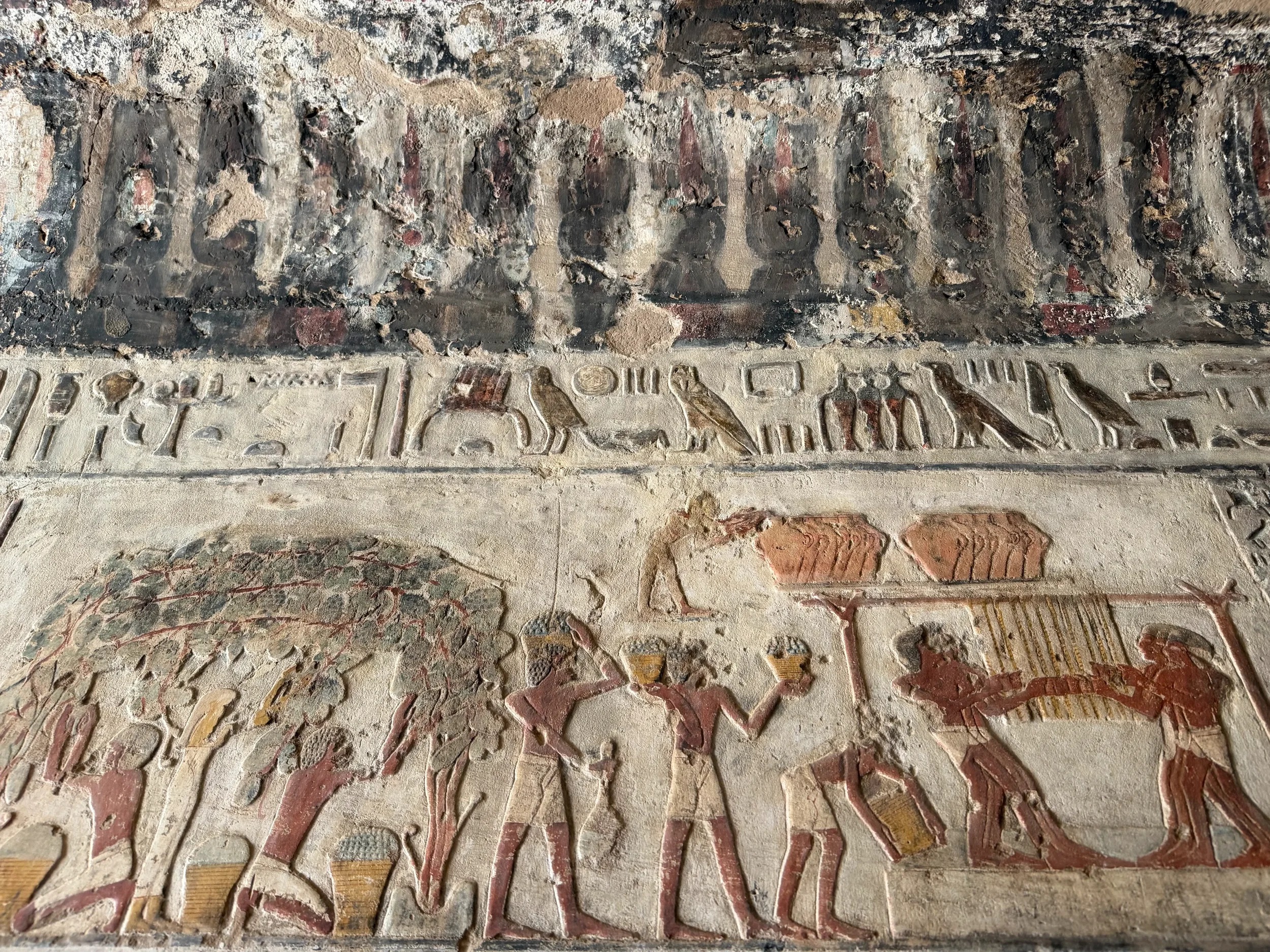
The El Kab Tombs were amazing, and almost no Dahabiya Boats ever visit this site!
Day 3: Edfu Temple, El Kab Tombs, and the Esna Lock
Today we visited Edfu Temple after breakfast, Egypt’s best preserved ancient temple. Just like Kom Ombo, this is a major stop on the large cruise itineraries, so having it almost all to ourselves was magical.
After hearing the story of Edfu Temple and getting all our questions asked about the ancient Egyptian history at the site, we continued cruising north until we got to our second site that no large cruises can even dock at - El Kab Tombs.
I hadn’t even been to El Kab in my 13 years of traveling around Egypt - that is how uncommon it is to get the chance to see these amazing New Kingdom Tombs!
We disembarked and walked around for 10 minutes until our private van picked us up and drove us 10 minutes to the ancient site.
El Kab features dozens of tombs carved into the side of a cliff, and we visited several of them, all more than 3,000 years old.
You can see in the photos that the details and colors inside these tombs are amazing, and the best part is that again, we were the absolute only tour group in the entire area.
After we got back on board The Nile Dahabiya we had a chance to see the boat with its sails unfurled, and the captain even let us go onto the tug boat in order to get these breathtaking shots of The Nile Dahabiya in all its glory.
Since Dahabiya yachts have a schedule to keep, we almost never used the sails during our cruise, so it was nice to have the chance to see them in action, and to take photos and videos!
That evening we went through the Esna Lock, and lowered around 6 meters in the river, before continuing north toward Luxor. The lock is always a highlight for my guests, many of whom have never been through a lock and dam system before cruising on the Nile.
And The Nile Dahabiya is one of the few Dahabiya Yachts that actually gets to go through the Ensa Lock, since most Dahabiya boats start and end their cruises in the city of Esna itself, south of the lock (they don’t want to pay the money to go through the lock and continue to Luxor).
I love that the itinerary of The Nile Dahabiya includes this special step, and allows you to cruise all the way to Luxor, instead of stopping in Esna and driving in a car for an hour to get to Luxor, like most Dahabiya boats.
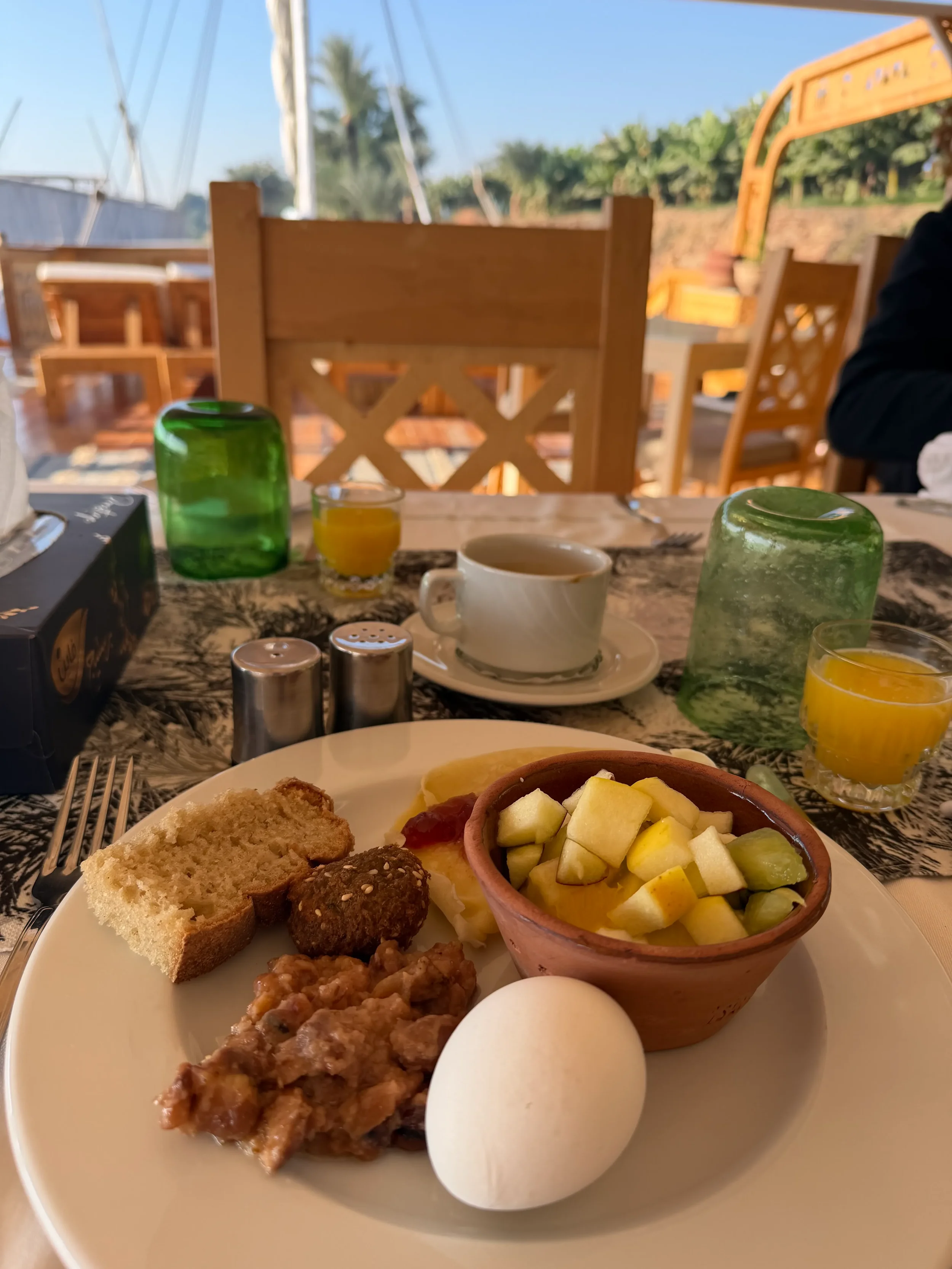
Breakfast on our last day - we didn’t want to leave!
Day 4: Arrival in Luxor, disembarkation, Karnak Temple and Luxor Temple
By the time we got to the fourth day of the trip, I couldn’t believe that the experience was almost over! We made it all the way to Luxor in the morning, and after breakfast, we said goodbye to the amazing crew and captain who made the whole experience possible.
The crew carried all of our bags and loaded them into a motorboat, and once we were across the river, everything got loaded up into our bus and then we went to Karnak Temple, the largest ancient Egyptian temple!
Karnak is always busy, since there are lots of tourists in Luxor who are staying in hotel, coming in for the day on tours from the Red Sea, and also doing Nile Cruises, but even with some crowds we managed to sneak off to certain parts of the temple complex that no other tour groups were visiting, so we still had some areas all to ourselves.
After Karnak Temple we stopped at Luxor Temple, right in the heart of the city, and this was our final stop with Ahmed, our knowledgeable Egyptologist guide. Ahmed took excellent care of our group the last four days and had such a wealth of knowledge about Egypt, ancient and modern, we were sad to say goodbye!
With the conclusion of our Nile Cruise, everyone got dropped off at their next stop - some folks went to hotels in order to spend more time in Luxor to visit more, and others went to the train station or the airport to travel to the next stop on their trip.
The Nile Dahabiya - 4-night and 5-day Nile Cruise from Luxor to Aswan
I shared my experience on the 3-night, 4-day Nile Cruise on The Nile Dahabiya embarking in Aswan and disembarking in Luxor, but tourists can also book a 4-night, 5-day journey on The Nile Dahabiya, which starts in Luxor and concludes in Aswan. The itinerary has some of the same stops that I shared from my Nile Cruise, and a few unique aspects you’ll only find on the 4-night itinerary.
Luxor to Aswan Nile Cruise Day 1: Embarkation, Karnak Temple, Luxor Temple
Around noon, embark on The Nile Dahabiya and have lunch. If you are already in Luxor or are arriving on an early morning flight or train ride, they can arrange extra visits for you (like we did by visiting Kalabsha Temple and the High Dam in Aswan).
After embarkation and lunch, visit Karank Temple and Luxor Temple, then return to The Nile Dahabiya for dinner on board, and overnight while docked in Luxor (there’s more to see the next day!)
Luxor to Aswan Nile Cruise Day 2: Sunrise Hot Air Balloon, Valley of the Kings, Hatshepsut’s Temple, Colossi of Memnon
In the morning, take an optional sunrise hot air balloon ride (let your tour guide know if you want to add this on), and then visit the famous sites on the Luxor’s West Bank (not the West Bank as in Palestine, but the west side of the Nile River!) - the Valley of the Kings, Queen Hatshepsut’s Temple, and the Colossi of Memnon.
Start cruising south, and cross through the Ensa lock sometime in the afternoon/evening.
Luxor to Aswan Nile Cruise Day 3: Edfu Temple and Ramady Island (local village visit)
This is a super unique day, because after visiting Edfu Temple (just like we did on the Aswan - Luxor cruise that I was on), you get to go to Ramady Island, a small island village in the Nile.
In the village you’ll walk through farm fields (seeing bananas, mangoes, and more!), interact with local Egyptian people from the village, and learn about what life is like along the Nile River for the thousands of farmers and their families who call this part of Egypt home.
Luxor to Aswan Nile Cruise Day 4: Gebel el Silsileh and Kom Ombo
Visit the ancient rock quarry of Gebel el Silsileh, and the ancient temple of Kom Ombo - just like I did during my cruise, but in reverse order!
In the afternoon, if the weather is warm enough and there’s time, you’ll stop at a sandy beach along the Nile for anyone who wants to jump in the river!
Luxor to Aswan Nile Cruise Day 5: Disembarkation and Philae Temple
You’ll visit Philae Temple after breakfast and disembark from The Nile Dahabiya, and then you’ll get dropped off wherever your next destination is (a hotel to sightsee more in Aswan, or the train station/airport to continue your journey).
If you want to arrange extra visits this day in Aswan, just ask! Or you can even head down to Abu Simbel in the afternoon in order to spend the night, seeing the magnificent temple first thing in the morning.
How to book a Nile Cruise on The Nile Dahabiya
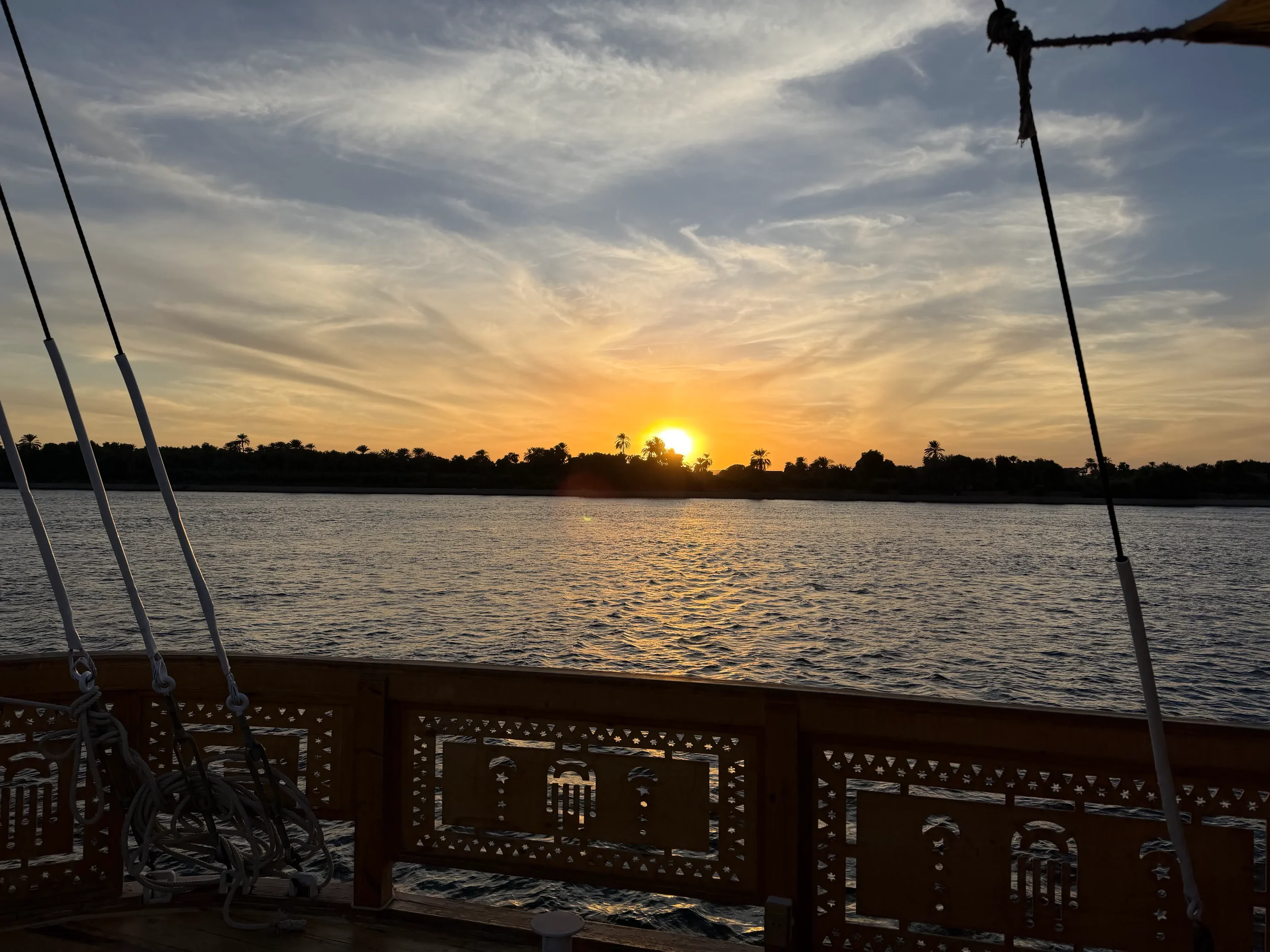
Want to experience sunset on the Nile? Book a cruise with The Nile Dahabiya!
After reading about my experience, do you want to take a cruise on The Nile Dahabiya?
To book a cruise on The Nile Dahabiya, you can get in touch with them on their website.
Or you can send them an email, or even send me an email, and I’ll get us connected!
Most Dahabiya boats do not have an option to simply click a button and book online, and since they have very limited availability and specific schedules, reaching out directly is the only way to grab your spot on an upcoming Nile Cruise.
While Dahabiya boats can sometimes have last-minute availability, I recommend booking your Nile Cruise at least 6 months in advance, and you can even book up to a year in advance, especially if you plan on going over popular times like between Christmas and New Years or over Easter Break or Spring Break.
I hope that you consider booking a Dahabiya Nile Cruise with The Nile Dahabiya during your time in Egypt! Leave a comment and let me know - what are your questions about cruising the Nile?
